
Ghost World
Through the lens of Americas most provacative Street Photogapher

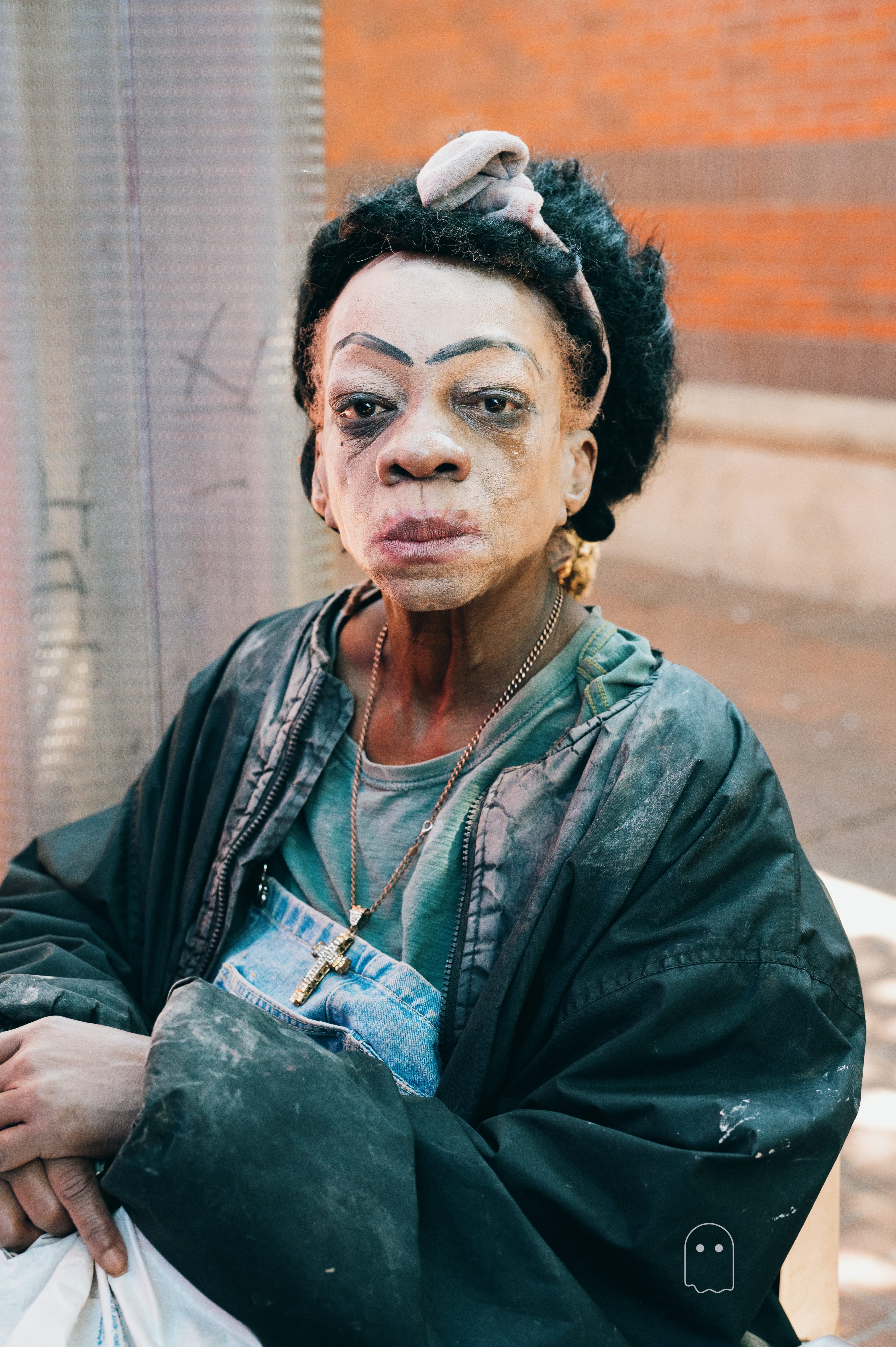
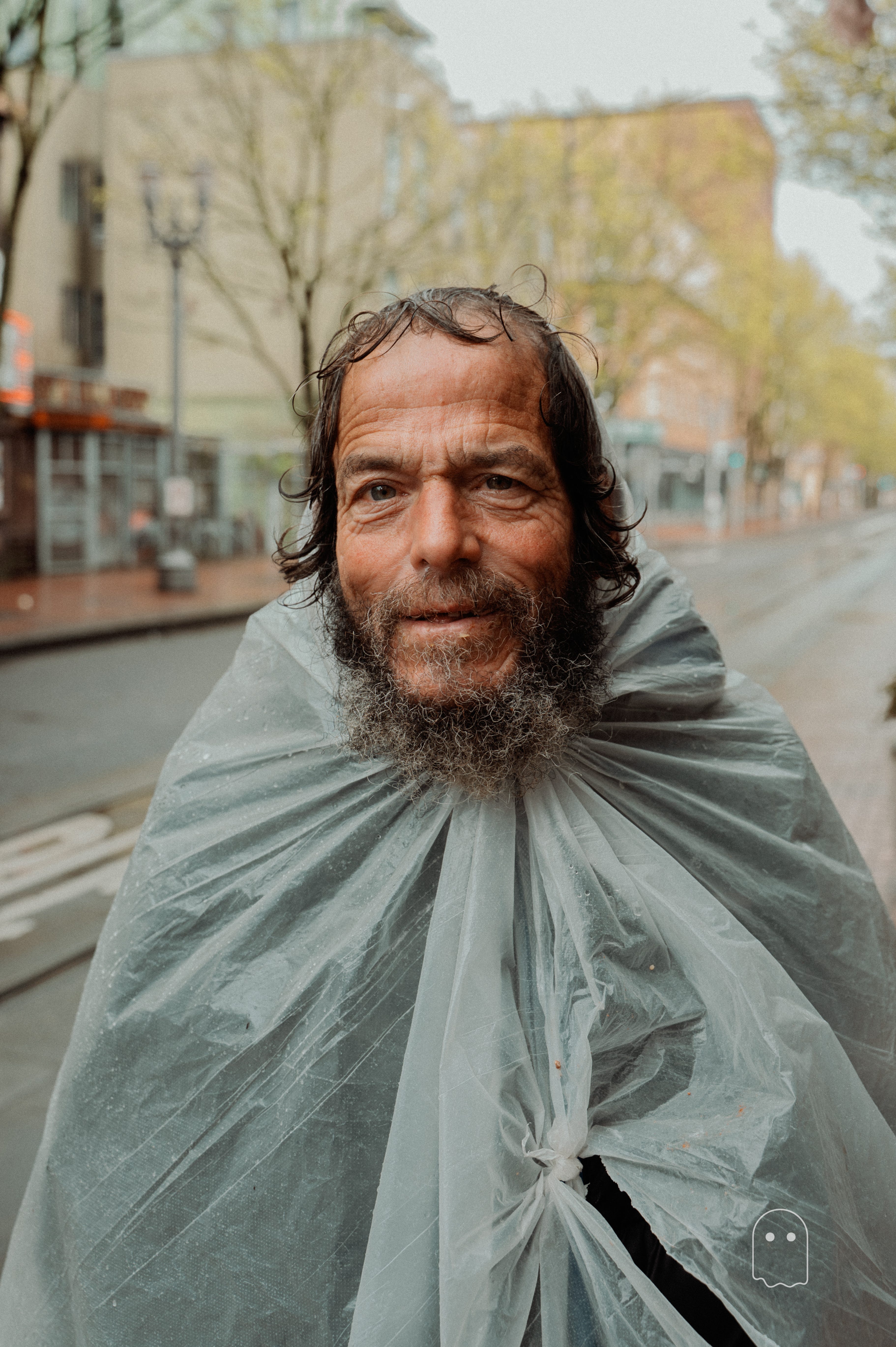
On a hot summer day in 2024, I was walking the streets with Tara Faul. Known to most as “Ghost,” when we stopped to talk to a homeless woman, we had photographed and interviewed her several times. She asked for another photo, and after Tara snapped it, she eagerly leaned in to see the screen. As she studied her own face, her expression shifted from carefree to heavy, almost mournful. She paused and said quietly, “You’re the only one who captures what I feel inside.”
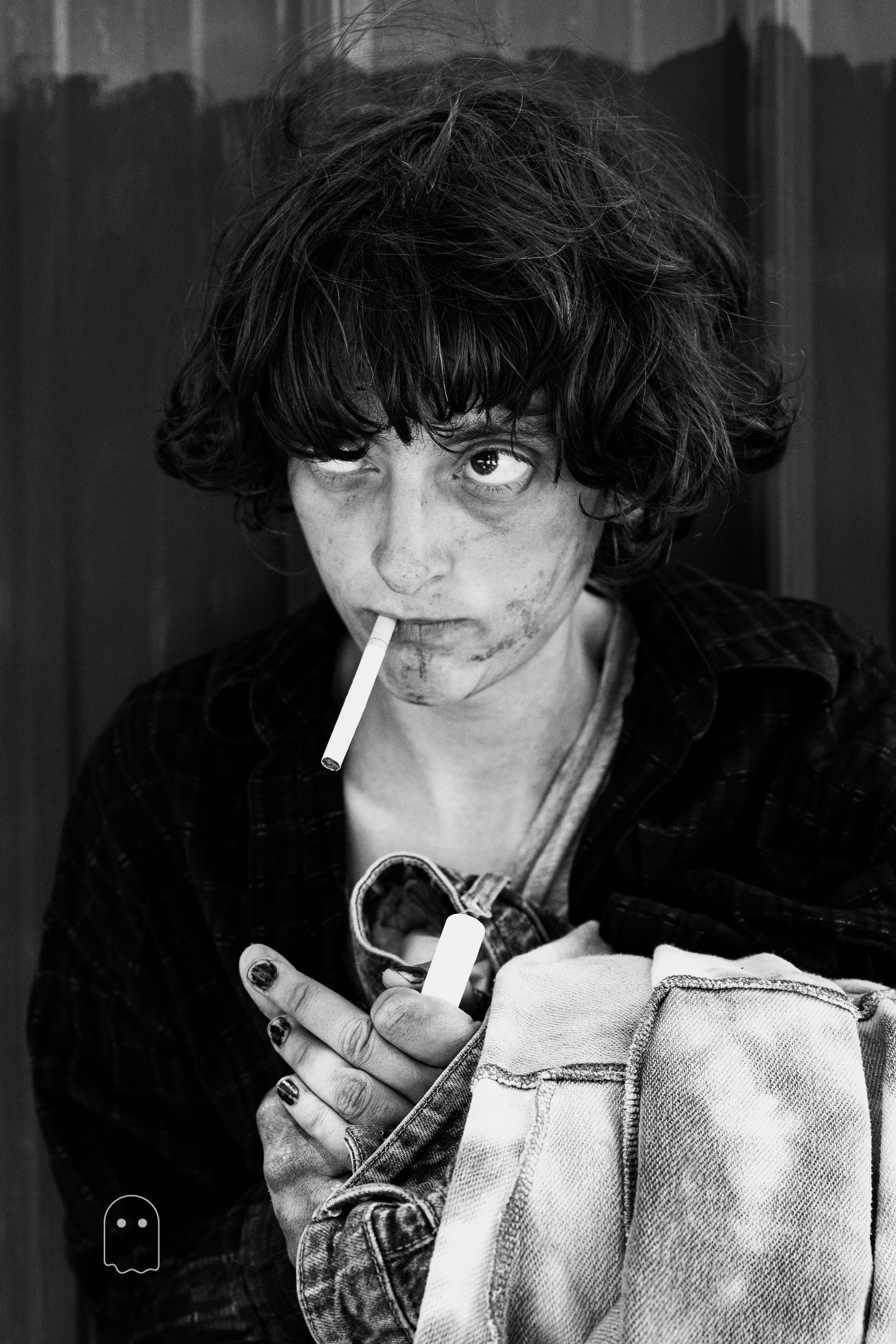
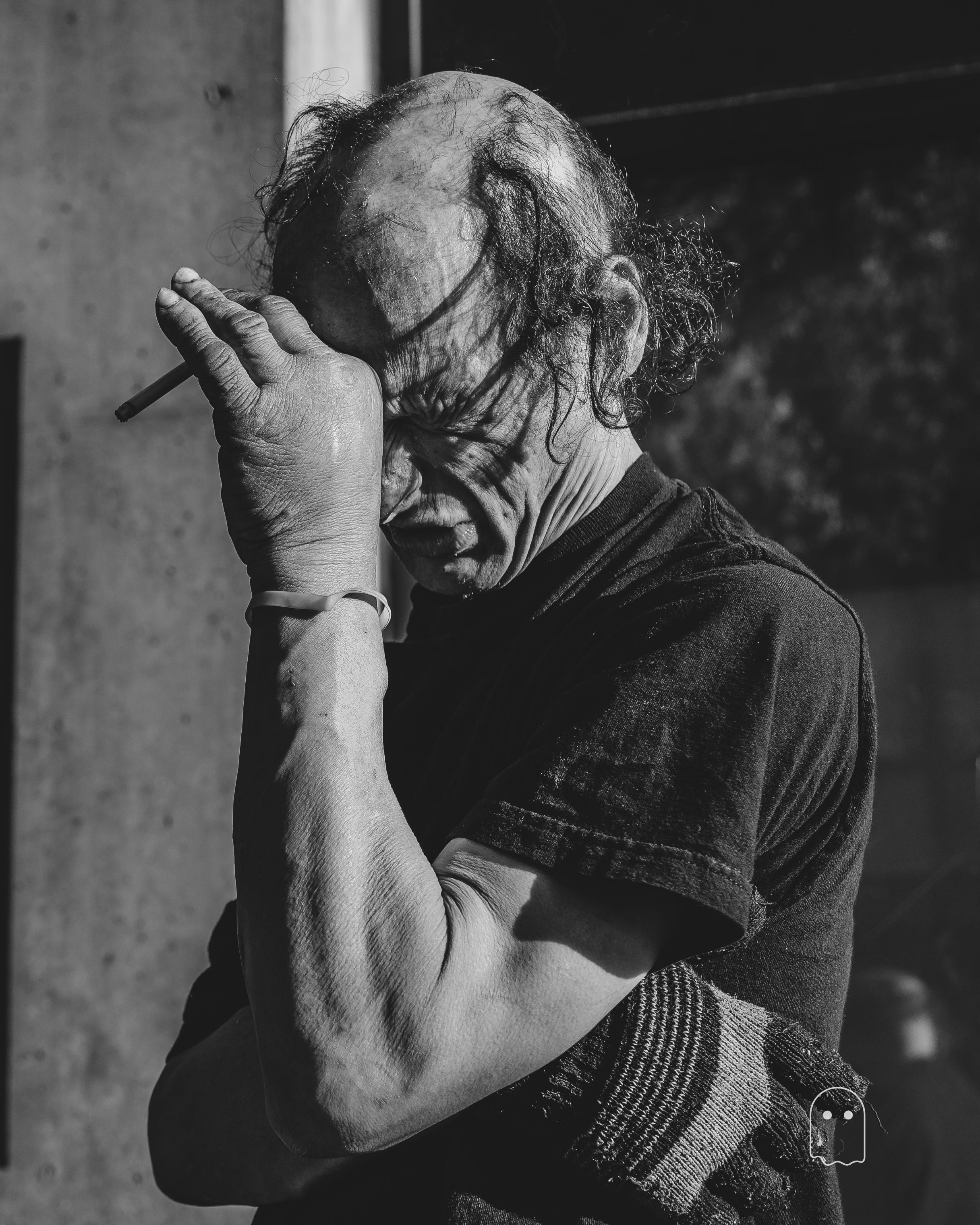
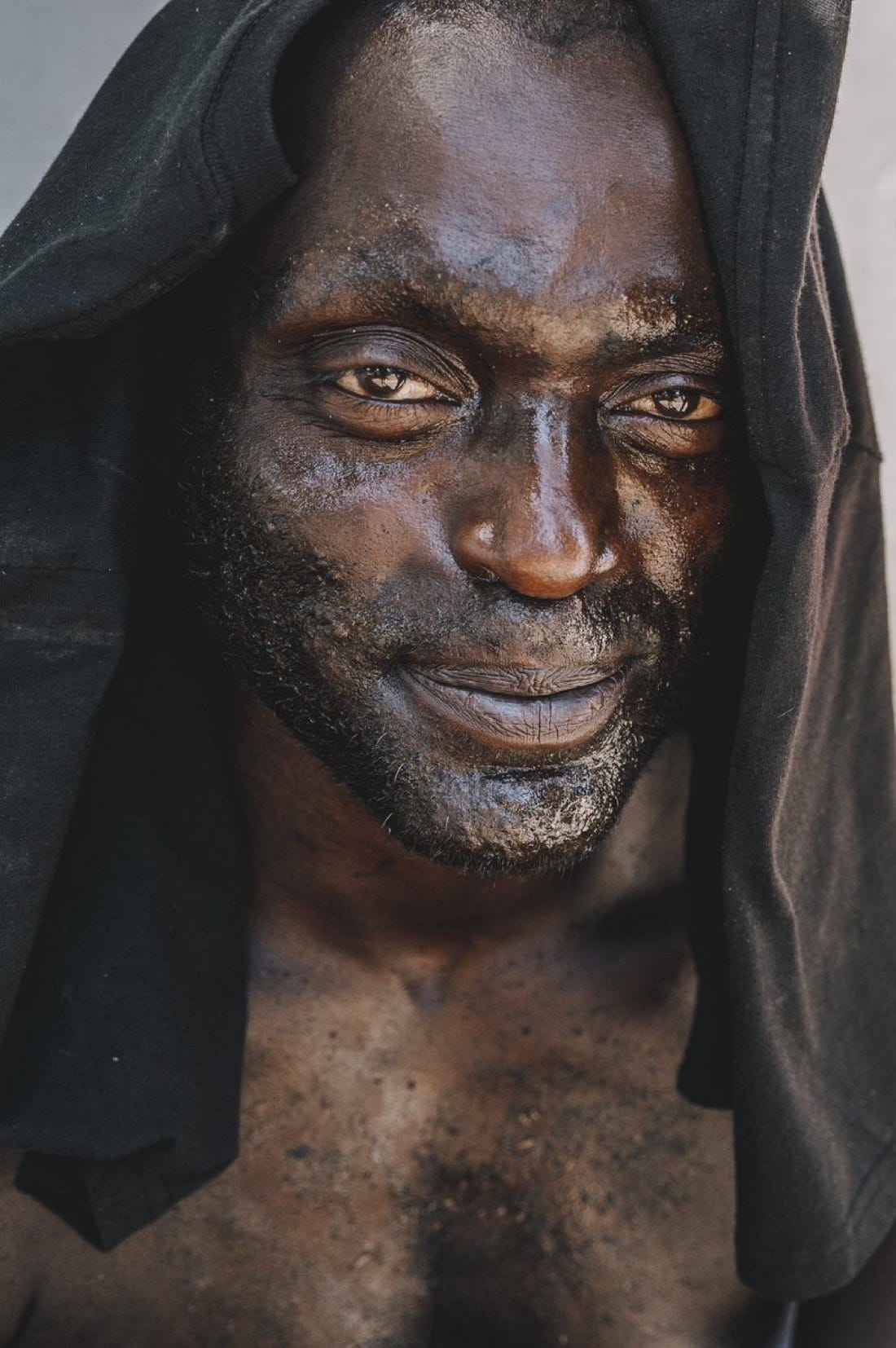
This is Tara’s gift. She doesn’t just photograph a person; she photographs the mood, the truth, and the weight they carry. Her images are raw and unfiltered. They capture the gritty realities of the streets without exploiting anyone and without glamorizing the struggle.
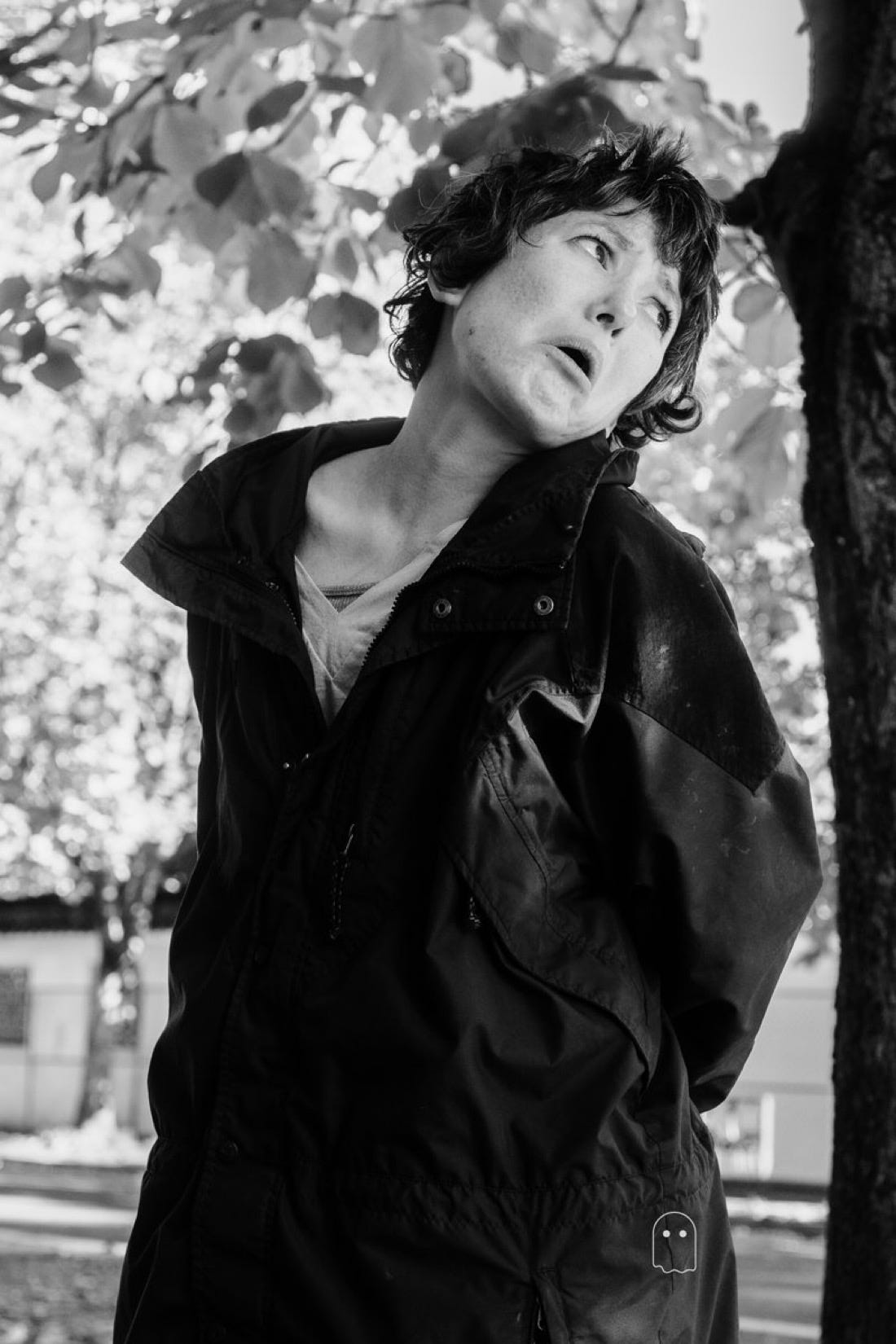
“Tara’s work is like a punch in the gut. You can’t look away from the truth in her shots.”
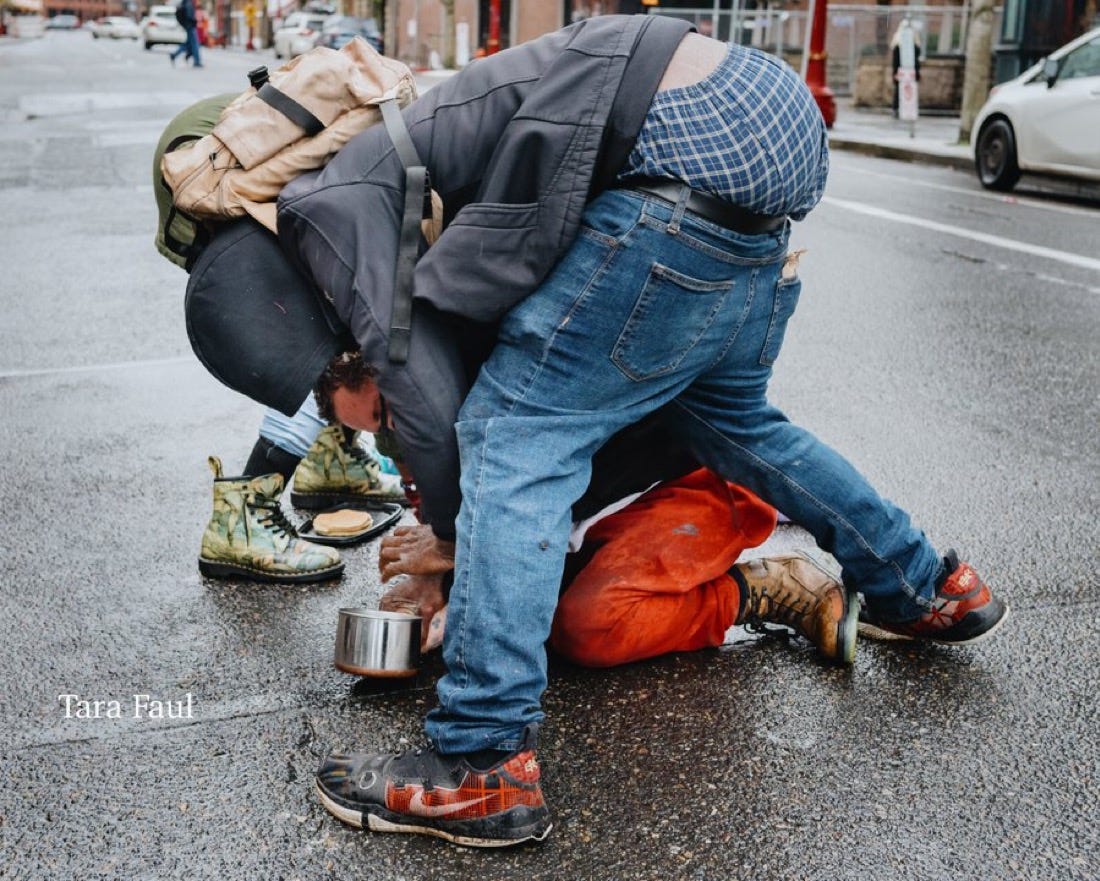
Her style prioritizes authenticity over aesthetic perfection. Her captions often confront Portland’s systemic failures head-on, giving her work both an artistic and socio-political edge. This blend of empathy, boldness, and uncompromising realism has made her photography a form of advocacy as much as art.
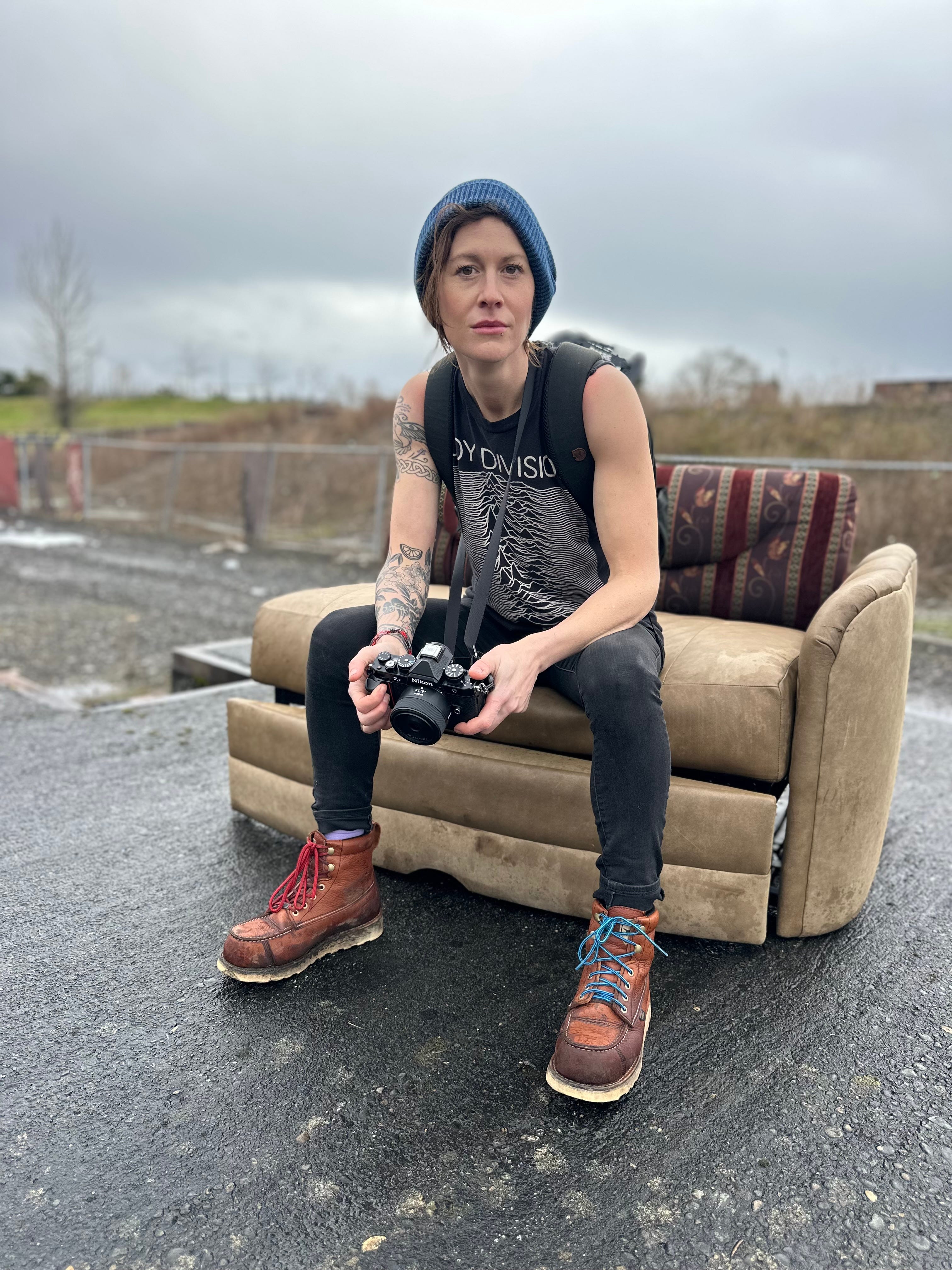
Tara’s nickname, Ghost, came from her twenties, when coworkers admitted they often forgot she was there and even wrote “ghost” on the office whiteboard to remember her. As she grew older, others used the same word to describe the way she moved
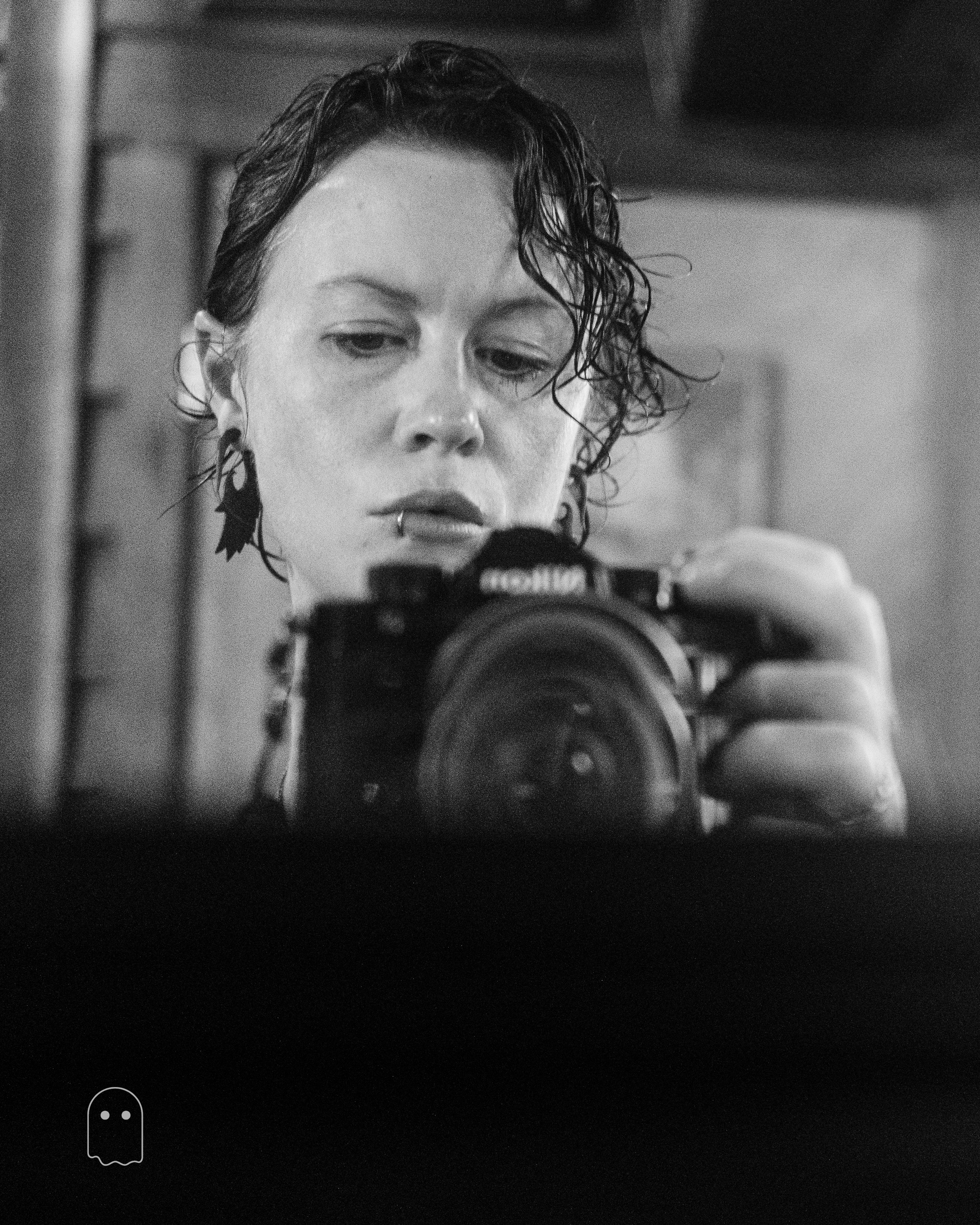
quietly, unnoticed, drifting in and out of places. The name stuck, and over time she embraced it. Today, she is known nationally as The Ghost, with her work published across the country and viewed more than half a billion times in a single year. It’s a name she isn’t proud of, but one that has undeniably shaped her.
In 2024, during an election year when homelessness and addiction surged to record levels, Tara and I undertook the most extensive documentation of a major city’s homeless population ever attempted. With no effective model in place to solve the crisis, we believed that capturing the truth, honestly, relentlessly, could push the public, media, and leaders toward real change.
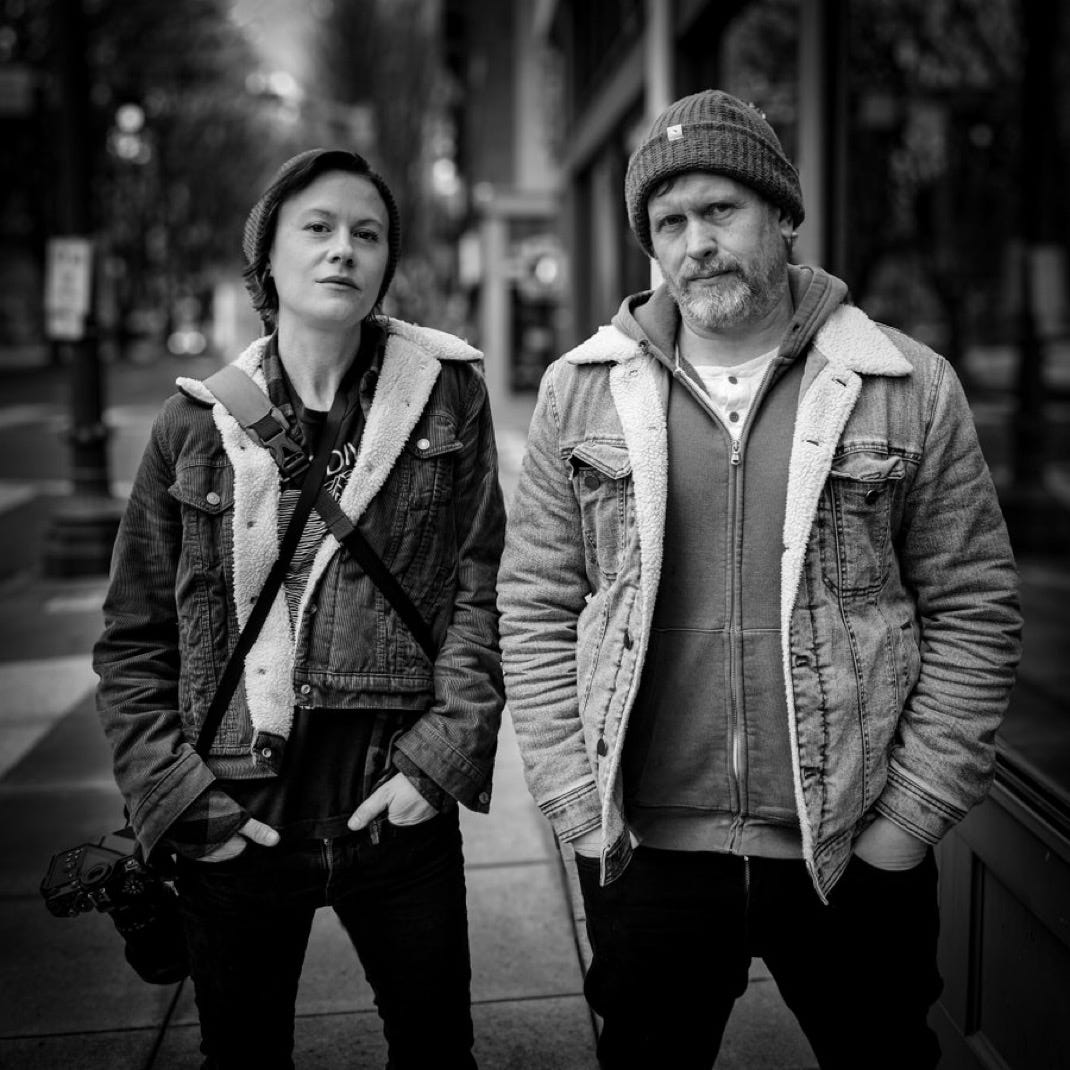
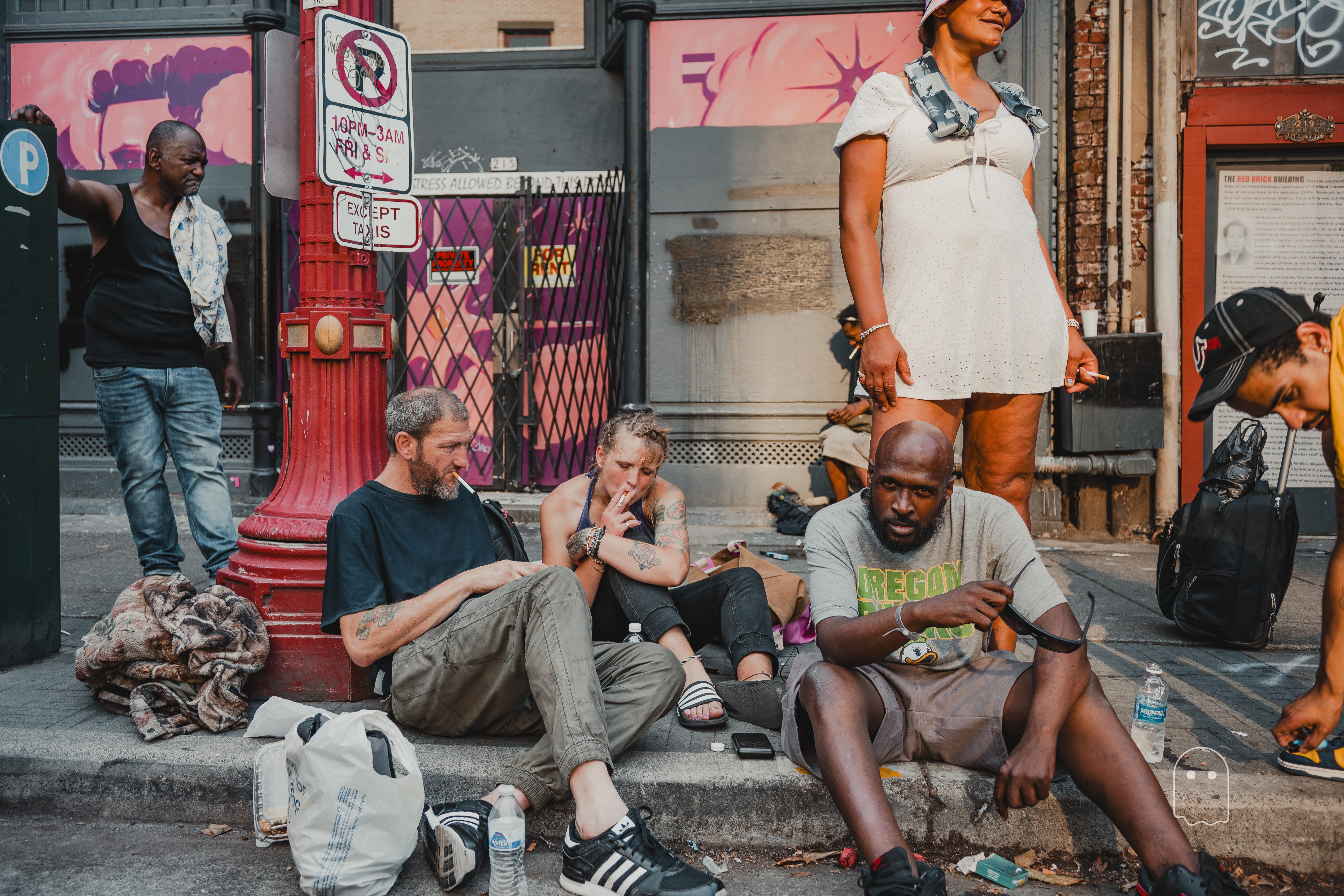
We met and documented a significant portion of Portland’s homeless community, in every neighborhood, in every condition imaginable. By the end of the year, several startling truths emerged. The majority of homeless individuals we met had never come into contact with the social-service system, despite that system receiving $744 million annually. Roughly 90% struggled with addiction or mental illness.
Oregon ranks among the worst in the nation:
• 3rd-highest rate of homelessness per capita
• highest prevalence of mental illness per capita
• 5th-highest rate of illicit drug use
We knew that if we could document a large enough segment of the population, the data might finally expose what was really happening—and force long-overdue reforms not just in Oregon, but nationwide. Our work wasn’t just counting numbers. It was listening. Interviewing. Learning the individual paths that led people to the streets and what kept them there.
“Her photos are the raw truth of Portland’s streets. She’s out there capturing what most people ignore.”
Through daily, intensive outreach, we interviewed, filmed, and photographed more than half of Portland’s homeless population over twelve months. What we uncovered was invaluable, and our reporting reached hundreds of millions online. Many elected officials and social-service leaders contacted us throughout the year to learn more. We believe that our findings influenced several key decision-makers with the authority to reshape funding models, changes that may soon become a turning point in this crisis. For the first time, solving it feels within reach.
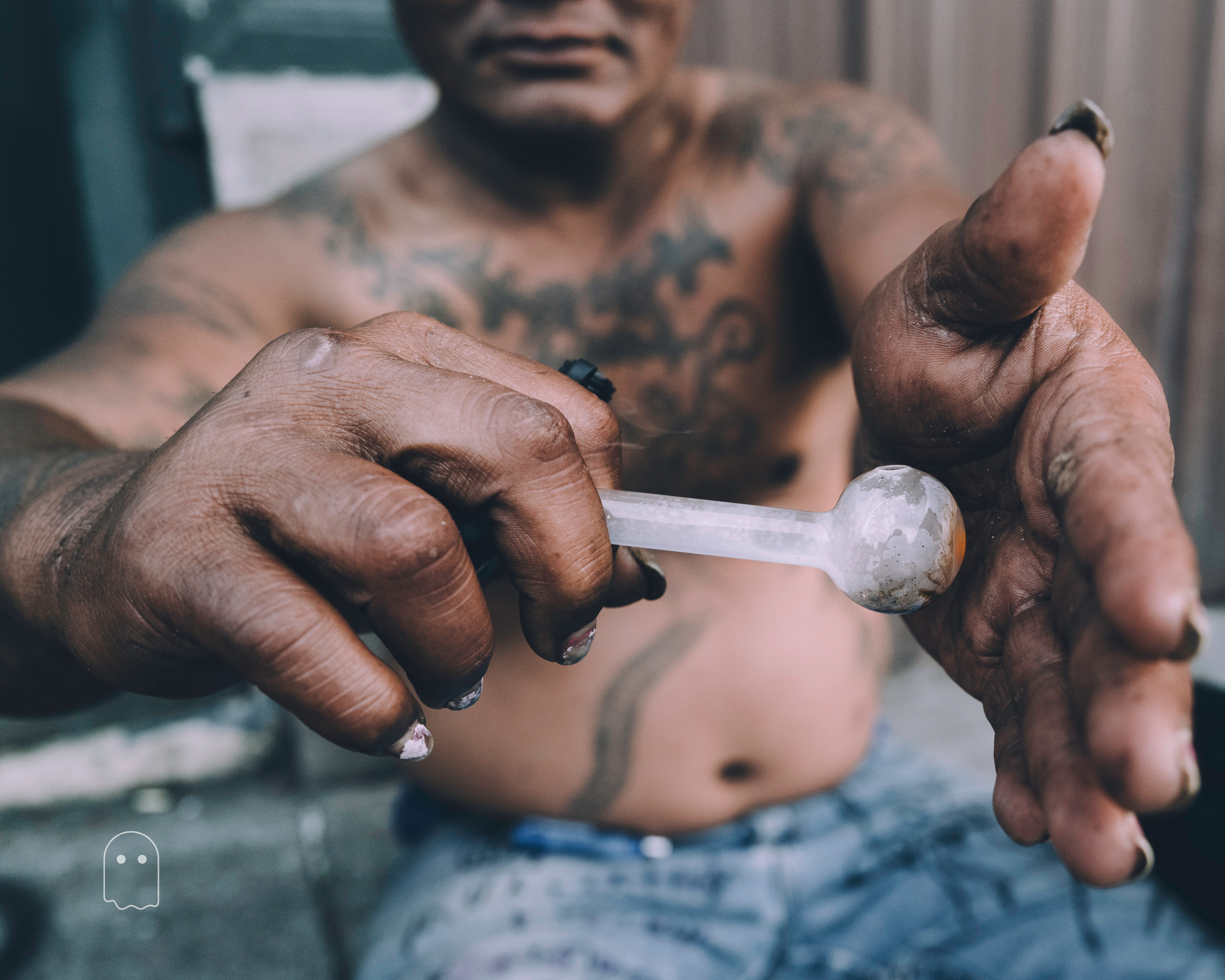
“Tara’s lens doesn’t lie. Her work forces you to confront the reality of what’s happening in our city.”
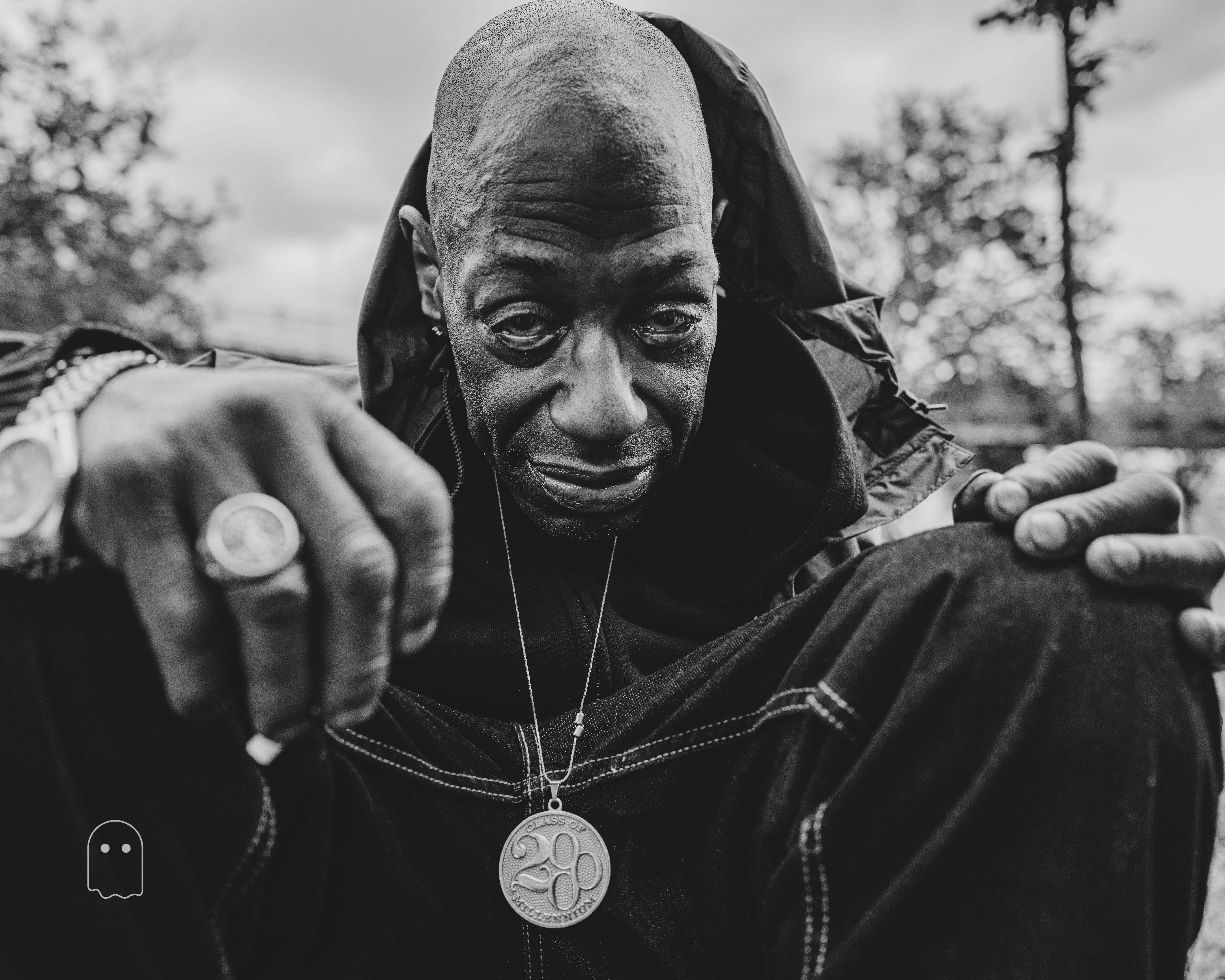
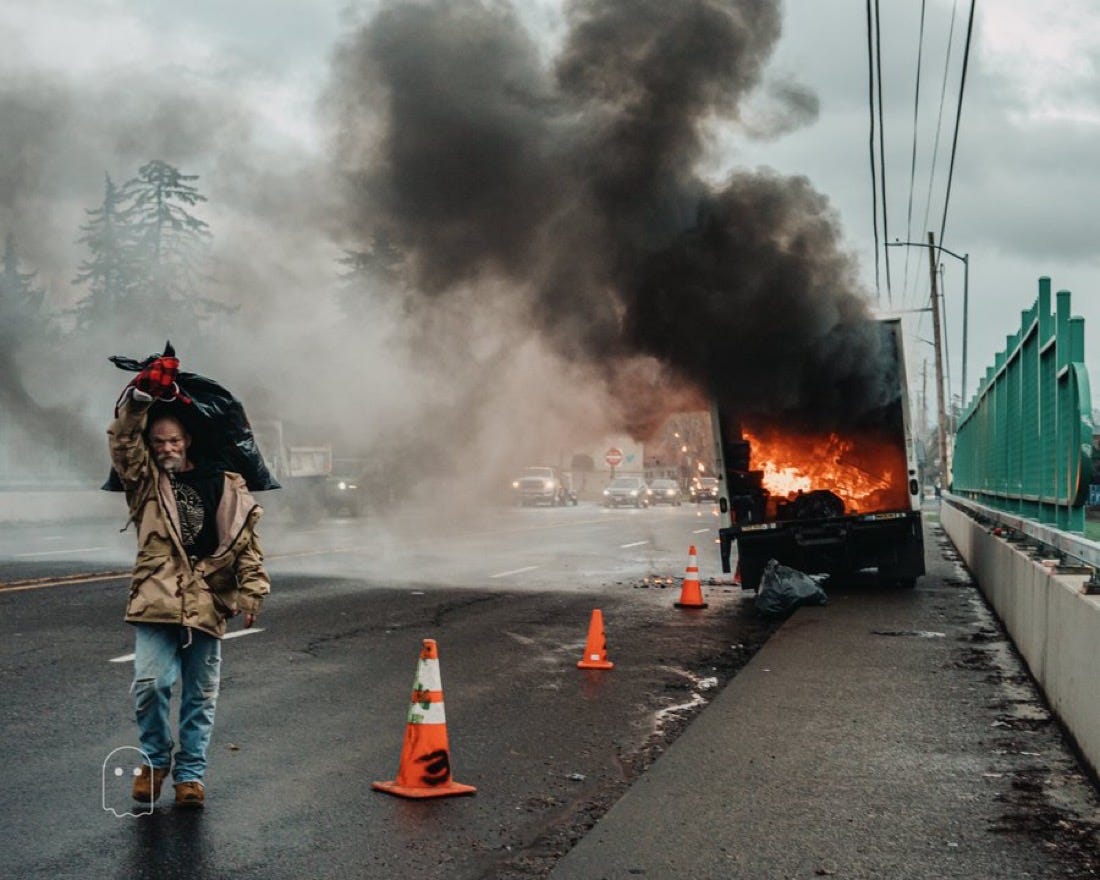
Tara Faul’s photography is intensely documentary—raw, unpolished, human. Her portraits utilize natural light and gritty urban backdrops: sidewalks, chain-link fences, alleyways, encampments. Every scene is a reminder of place, of struggle, of how close or far someone is from hope.
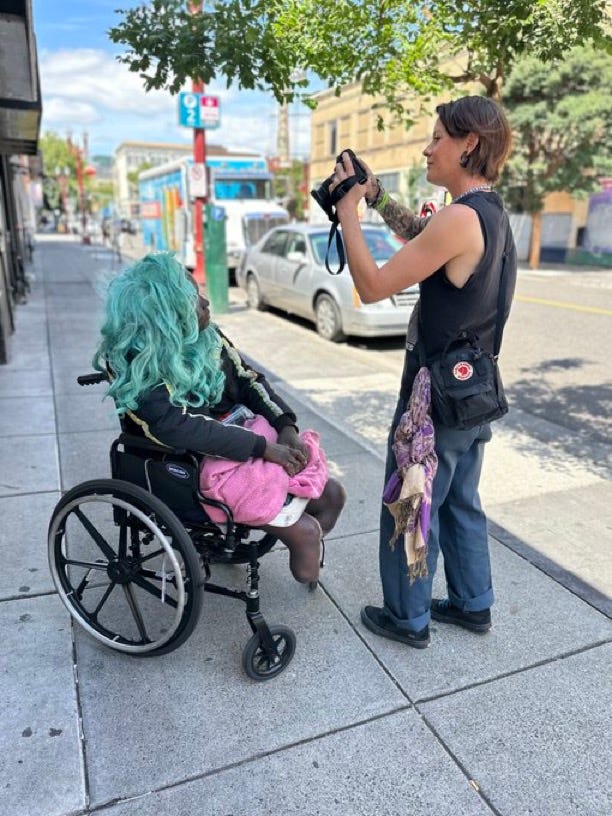
Working with her inspired me to begin taking meta-style photos, showing her in the act of capturing these moments, to give the public a behind-the-scenes look at the environments we walk into every day.
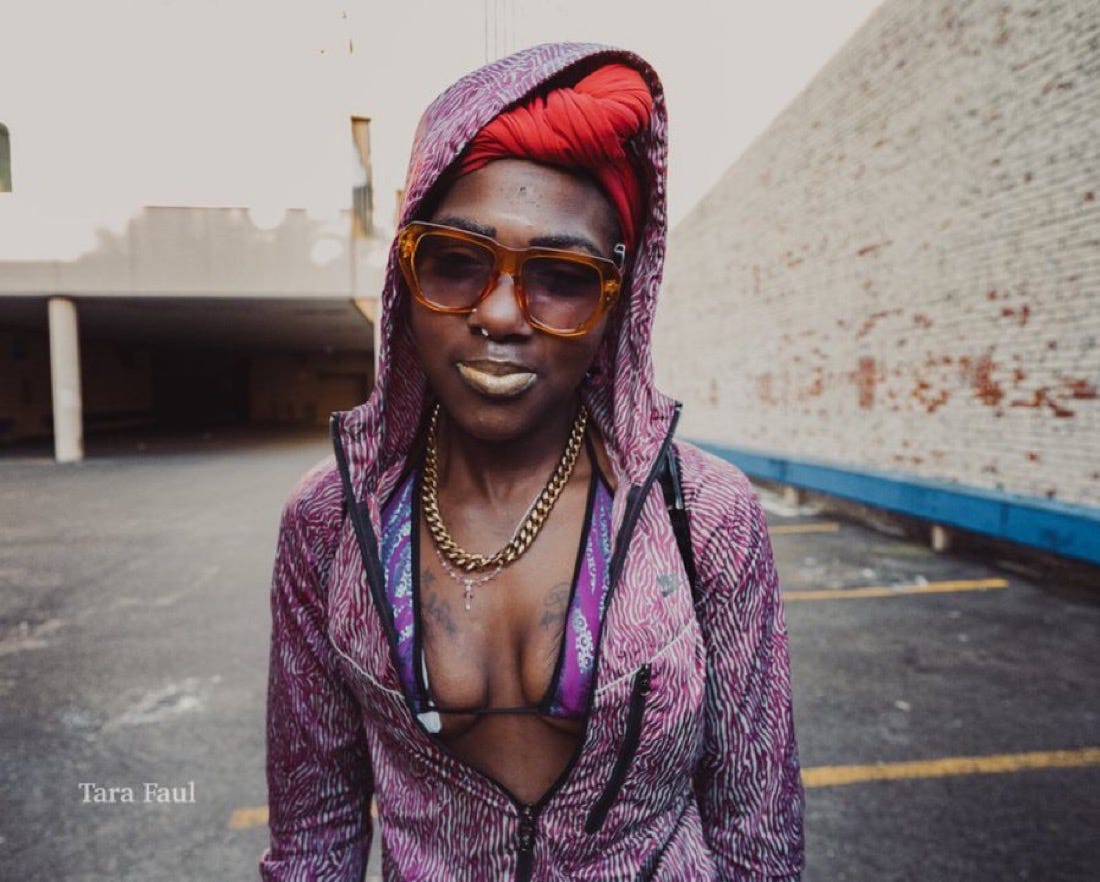
Tara brings a deep sense of humanity to every encounter. She is a resilient, empathetic realist with a fiery edge, someone who exposes uncomfortable truths, builds genuine connections, and uses her creativity to shed light on people society often ignores, all while balancing the demands of family in a deeply flawed world.
We are living through a historic moment. I believe that one day, Tara’s work will help future historians understand what it was like to live during such chaotic times, and, more importantly, how to avoid repeating the mistakes that brought us here.
Follow her work
X: @tarafaul503
Instagram: ghostportland
Remarkable photography, like that of Henri Cartier Bresson, Dorothea Lange, or Margaret Bourke White.
Too many (particularly in Oregon) want to look away and deny the cruel reality.
It is worth noting that during the terrible years of 2020 and 2023 (when Measure 110 effectively legalized all drug use) Oregon managed to capture the Number One position nationally in drug overdose death increases, topping a 1000% increase in one year over the prior year (there are a few - four - other states, as Dahlgren notes, that have even worse overall substance abuse problems than Oregon).
I've been following Tara since I found your Substack and X posts. She seems like a Mother Theresa with a camera, the way she not only photographs but actually cares for the people she meets every day on the streets of Portland.
I find it inspiring in a good way, and I've begun to question the policies I once thought were helping our neighbors a lot more than they apparentlyare doing.
I live near Portland and your recent articles and videos of Vancouver and Seattle have been eye opening. I have a friend who is working in a city program called HART and who is invested in helping the homeless and who I know cares very deeply about the problems of trying to get people off the street and healthy and independent. I wonder about the stresses of working within a system that is meant to help but that seems to be more like trying to row upstream with tennis rackets for oars.