

Portland’s Sweep Machine
Taxpayers are funding a cycle of cleanup, displacement, and failure while the homeless service system avoids the outcomes that matter.

A typical street homeless person in Portland can be swept dozens of times a year. In some cases, close to a hundred. A small sweep can involve police officers, city staff, cleanup crews, nonprofit outreach workers, trucks, storage, disposal fees, and contractors. By the time it is over, the city can spend thousands of dollars clearing one camp. Multiply that by thousands of sweeps a year, and taxpayers are spending millions to move the same people from one block to the next. This is not how it is supposed to work. The city is supposed to enforce public space laws, but the homeless service system is supposed to do its job too. The goal should be to break the cycle of homelessness, not simply move the same person to a different sidewalk, park, trail, or doorway.
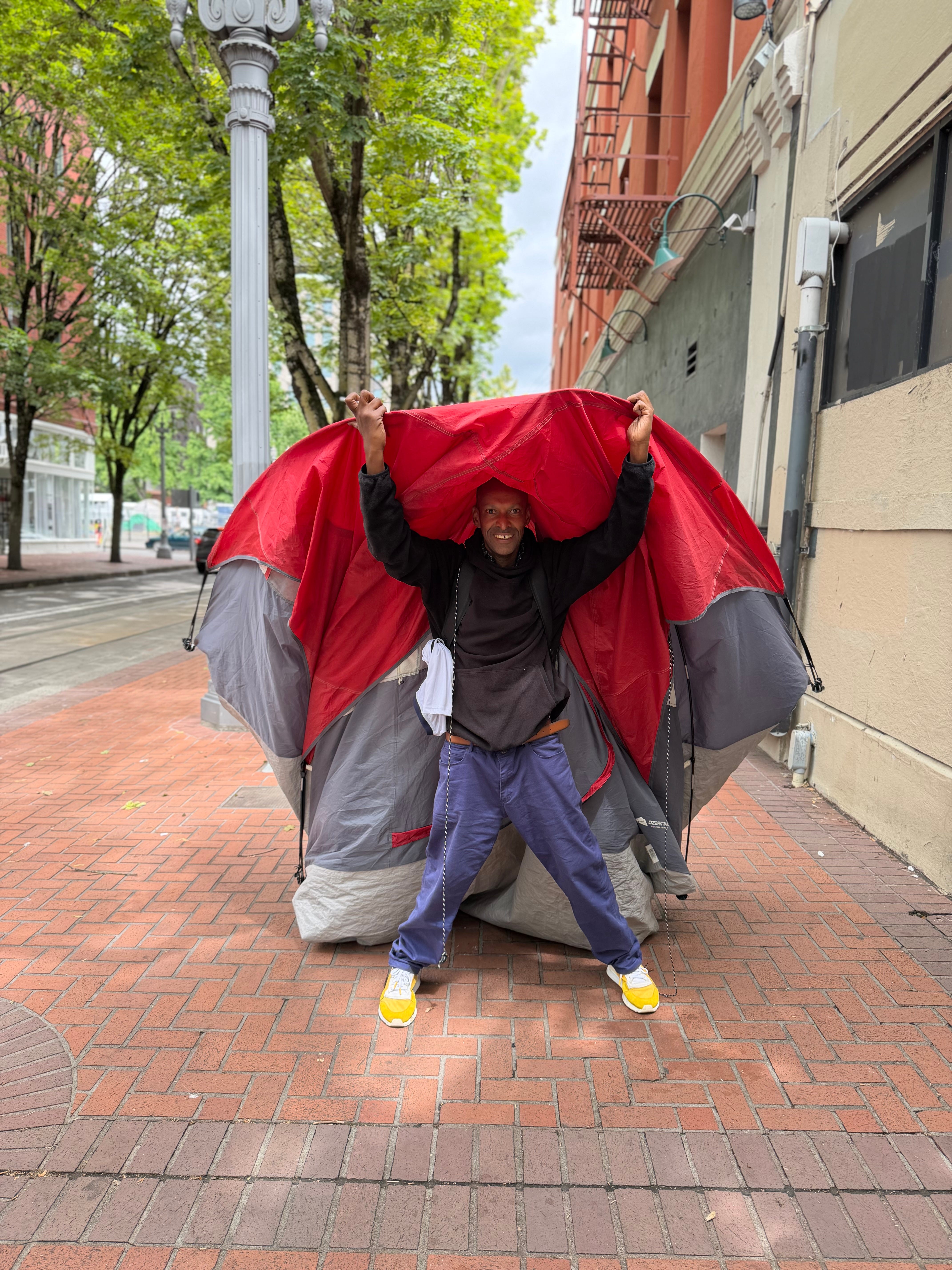
The problem is that real help is often not being offered. In well over 90% of the sweeps I have witnessed, the homeless person is simply displaced and remains homeless. I have seen over a thousand sweeps and interviewed countless homeless people during them. A high percentage told me they were either not offered help at all or were offered something nowhere near realistic to accept. I once did a ride-along with police, and we stopped to observe a sweep of campers living in the woods. What they were offered was a one-day stay at a church shelter two towns away, with a limit of two bags. Not one homeless person accepted. Many simply walked back into the woods once the workers started to leave. That is not a real offer of help.
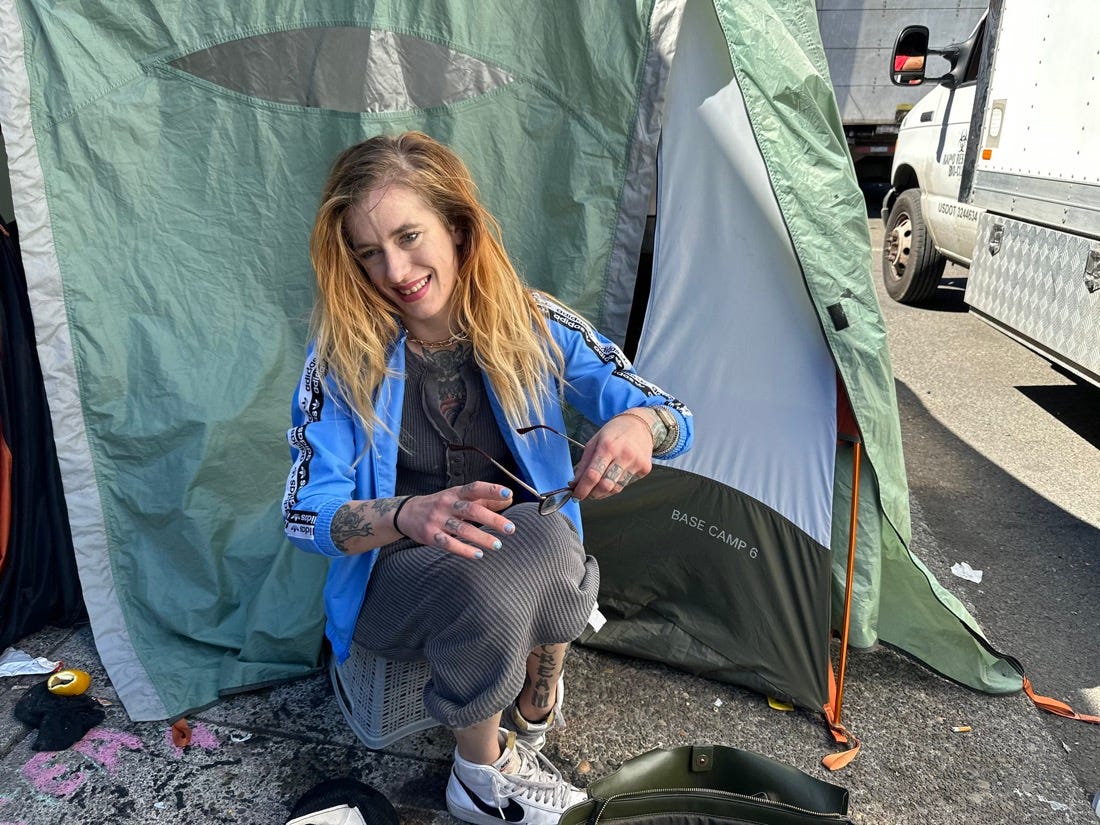
I was once in Delta Park in North Portland, standing inside a large tent with a weeping homeless veteran who was being forcibly moved. He told me he had not been offered any help. I asked one of the clean team workers about it. Because I was filming, they later returned with someone to talk to him about shelter. That should have happened before the sweep, not after a camera showed up. The public is often told that before a
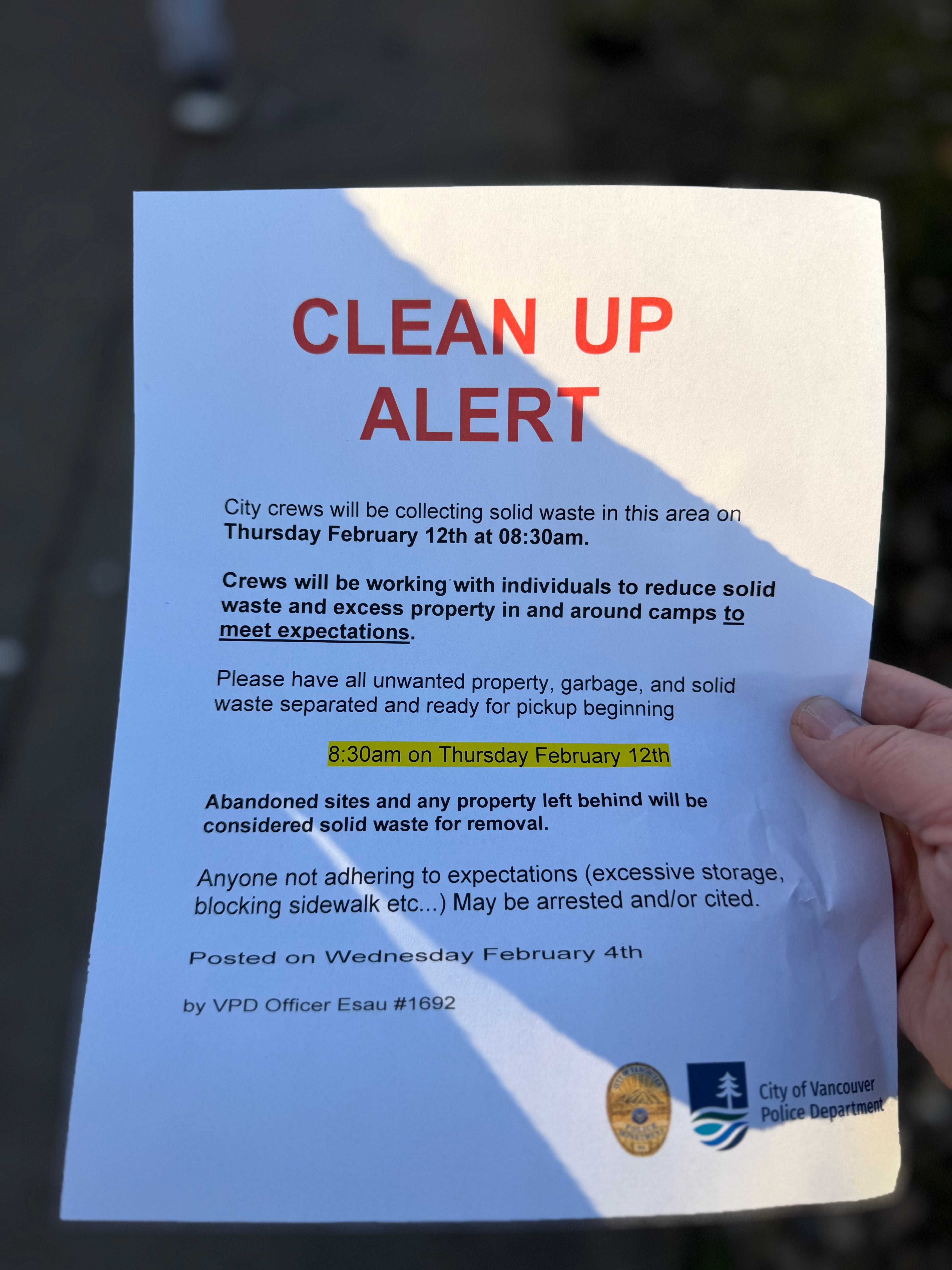
camp is removed, people are offered services. Maybe that is technically true on paper. Maybe someone walked through with a clipboard. Maybe a flyer was handed out. Maybe a shelter bed was mentioned. Maybe a “contact” was logged in a database. But a real offer of help is not someone yelling, “Shelter is available,” while a person is trying to save their belongings from being thrown away. A real offer is not a piece of paper taped to a tree. A real offer is not one brief conversation with someone who is psychotic, addicted, traumatized, or too overwhelmed to understand what is happening.
Real outreach takes time. It takes trust. It takes follow-through. It means showing up before the sweep, during the sweep, and after the sweep. It means knowing the person’s name, story, barriers, addiction, mental health status, family situation, and what it would actually take to get them off the street. It means detox, treatment, shelter, recovery housing, medical care, family reunification, transportation, ID replacement, and long-term support. It also means not giving up the first time someone says no. That is almost never what a sweep looks like.
Too often, sweeps create the appearance of action without demanding the results that actually matter. Politicians point to a cleaned sidewalk. Agencies point to a completed operation. Contractors point to how many tons of trash were removed. Outreach teams point to how many contacts were made. And that is where the data usually stops. The public has a right to know what happens after a sweep. How many people accepted shelter? How many entered treatment? How many reunited with
family? How many received medical care? How many refused everything? How many are still outside 30 days later? How many are still alive six months later? How many are stable a year later? Too many homeless nonprofits resist meaningful metrics, oversight, and required measurable results. They often claim this is about respecting a person’s privacy. In reality, it can also protect a failed approach from being exposed. If the answer is almost nobody, then we need to be honest. The sweep failed.
I want my sidewalks back. I want my parks back. I want families to walk through public spaces without stepping over needles, human waste, stolen bike parts, or people passed out from fentanyl. The public should not be forced to surrender entire neighborhoods because government failed to do its job. But sweeps still need to be done the right way. That does not mean every sweep is wrong. Some encampments
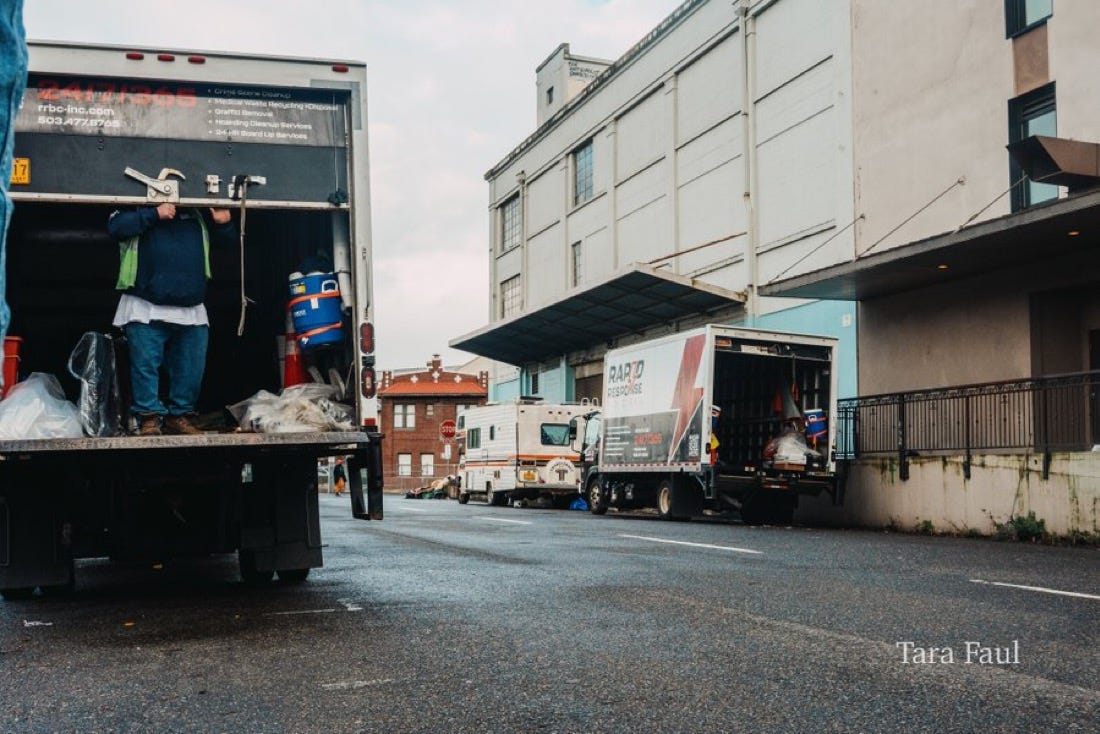
are dangerous. Some are filled with violence, drug dealing, exploitation, fires, stolen property, and serious public health hazards. Some camps become so unsafe that leaving them in place is not compassion. It is abandonment. Nobody has a right to destroy a park, block a sidewalk, terrorize a neighborhood, or turn public space into an open-air drug scene. But removing a camp without a real exit plan is not compassion either. It is just displacement.
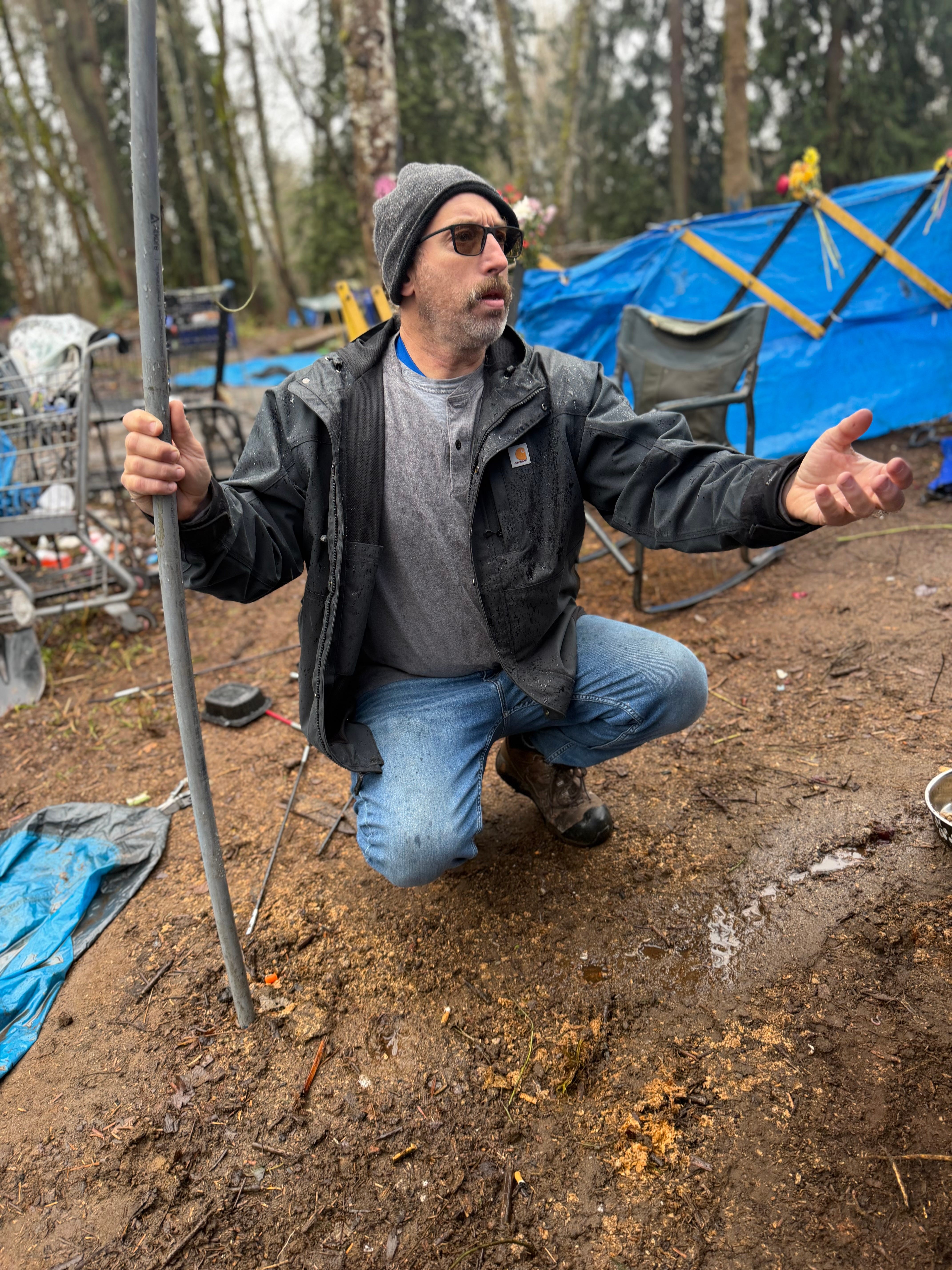
This is where both sides often get it wrong. Activists who oppose every sweep no matter what are not living in reality. Some camps are not safe for the people inside them or the public around them. Pretending every tent is just poverty with a tarp over it ignores the violence, addiction, trafficking, mental illness, and predatory behavior that often exist in these encampments. But politicians who treat sweeps as a solution are not living in reality either. You cannot bulldoze addiction. You cannot power-wash mental illness. You cannot throw away trauma. You cannot remove fentanyl dependency with a garbage truck. If all you do is move people around, you are not solving homelessness. You are managing optics. And taxpayers are paying for it.
Before a sweep, every person in the camp should be assessed by name. Not as a tent. Not as a complaint. Not as a statistic. As a human being. Who are they? How long have they been outside? Are they addicted? Are they mentally ill? Are they medically fragile? Are they fleeing violence? Do they have family somewhere? Do they want treatment? Do they want shelter? Do they need a ticket home? Are they already on a housing list nobody can explain to them? After that, there should be a real plan. If someone wants help, there should be an immediate pathway. Not a phone number. Not a waiting list that goes nowhere. Not “come back Monday.” An actual offer that matches their situation.
Shelter for people who can use shelter. Detox for people ready for detox. Recovery housing for people serious about recovery. Medical care for people who are sick. Civil commitment or secure treatment for people clearly too mentally ill to survive outside. Family reunification for people who have a safe place to go. And for people who refuse every option, there still has to be accountability. The public does not have to accept permanent lawlessness because someone says no. But the system also should not pretend that one refusal means the job is done. Addiction, psychosis, trauma, and street survival can make people reject help they desperately need. Outreach must be persistent, assertive, and honest.
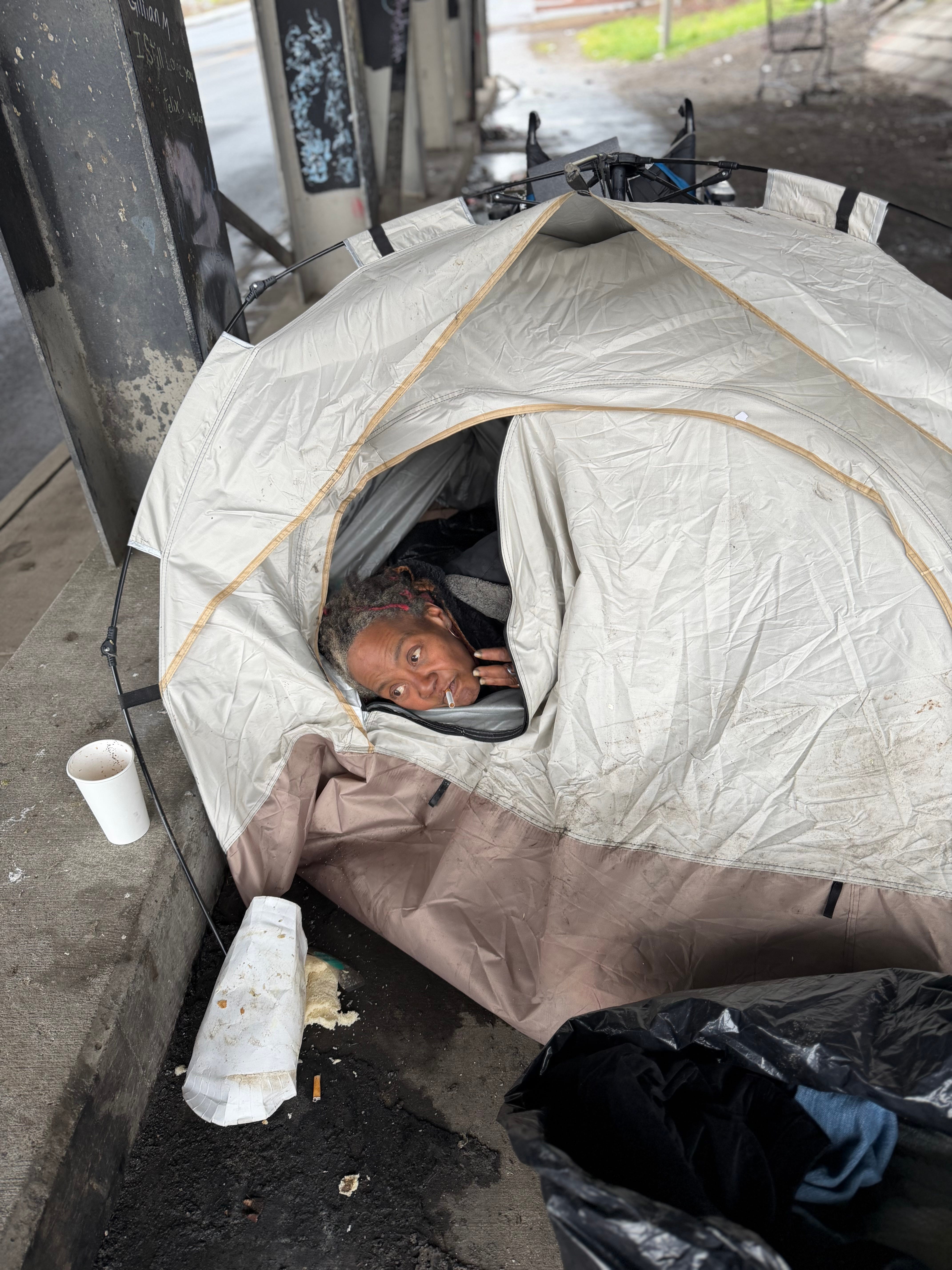
Every sweep should be judged by outcomes. If a camp is removed, the city and county should publicly report what happened to every person contacted: how many accepted shelter, entered treatment, reunited with family, received medical care, refused help, remained outside 30 days later, or died six months later. That is accountability. Right now, too much of the system is built around motion instead of progress. A camp is posted. A camp is swept. A camp reappears. Another complaint
is filed. Another cleanup is scheduled. Another nonprofit is funded. Another politician says they are taking action. Meanwhile, the homeless person is still dragging the same cart down the same street, looking for the next place to sleep. That is not compassion. That is not enforcement. That is failure dressed up as action. The goal should not be to make homelessness less visible. The goal should be to end it.
Please restack to help it gain a wider audience
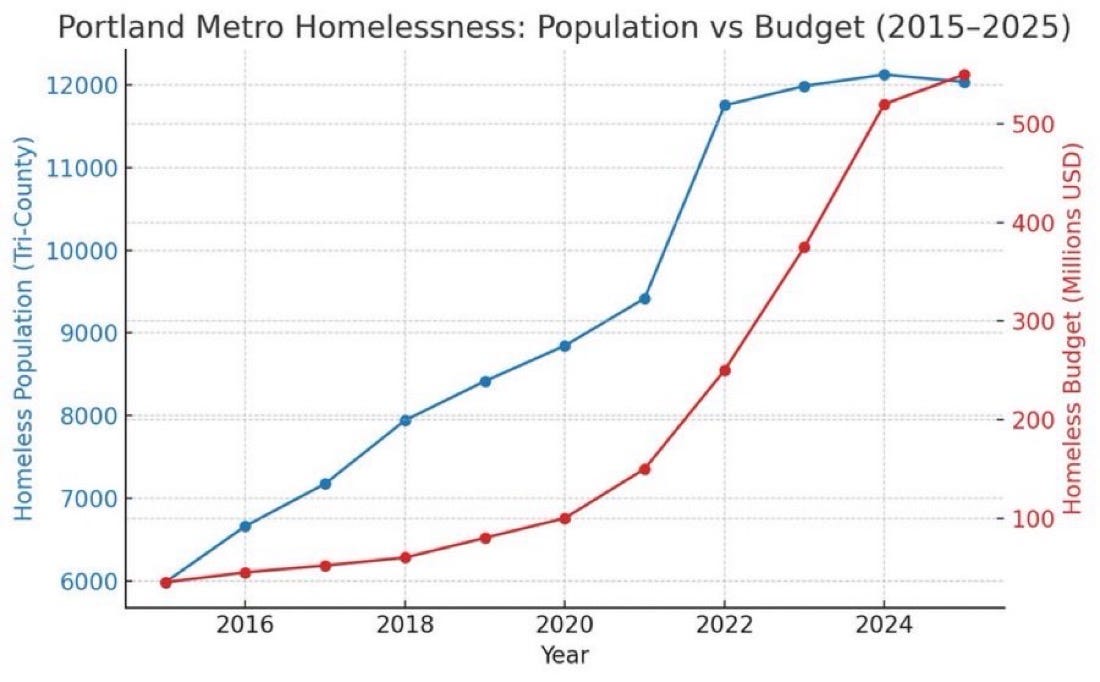
The homeless industrial complex is a jobs program for those with useless social service degrees. They've been taught clipboard empathy and PowerPoint skills, not the core problems that need solved nor HOW to solve them. The graph proves it: more homeless = more program money!
This is one of the best things I've read about the Portland homeless situation. And it's well written!
I think many people believe that this comprehensive outreach is happening already! There's no mention of this utter failure on the local news, where it's presented as an unsolvable, systemic problem.
Kevin's work is literally the only reason I know the services AREN'T happening. And I notice no one from these homeless services programs EVER dares to write a rebuttal to Kevin's posts (at least in my feed).
I wish Kevin could be in charge of our homeless programs.