

The Compassion Cartel
How the nonprofit left turned helping the homeless into a demand for obedience

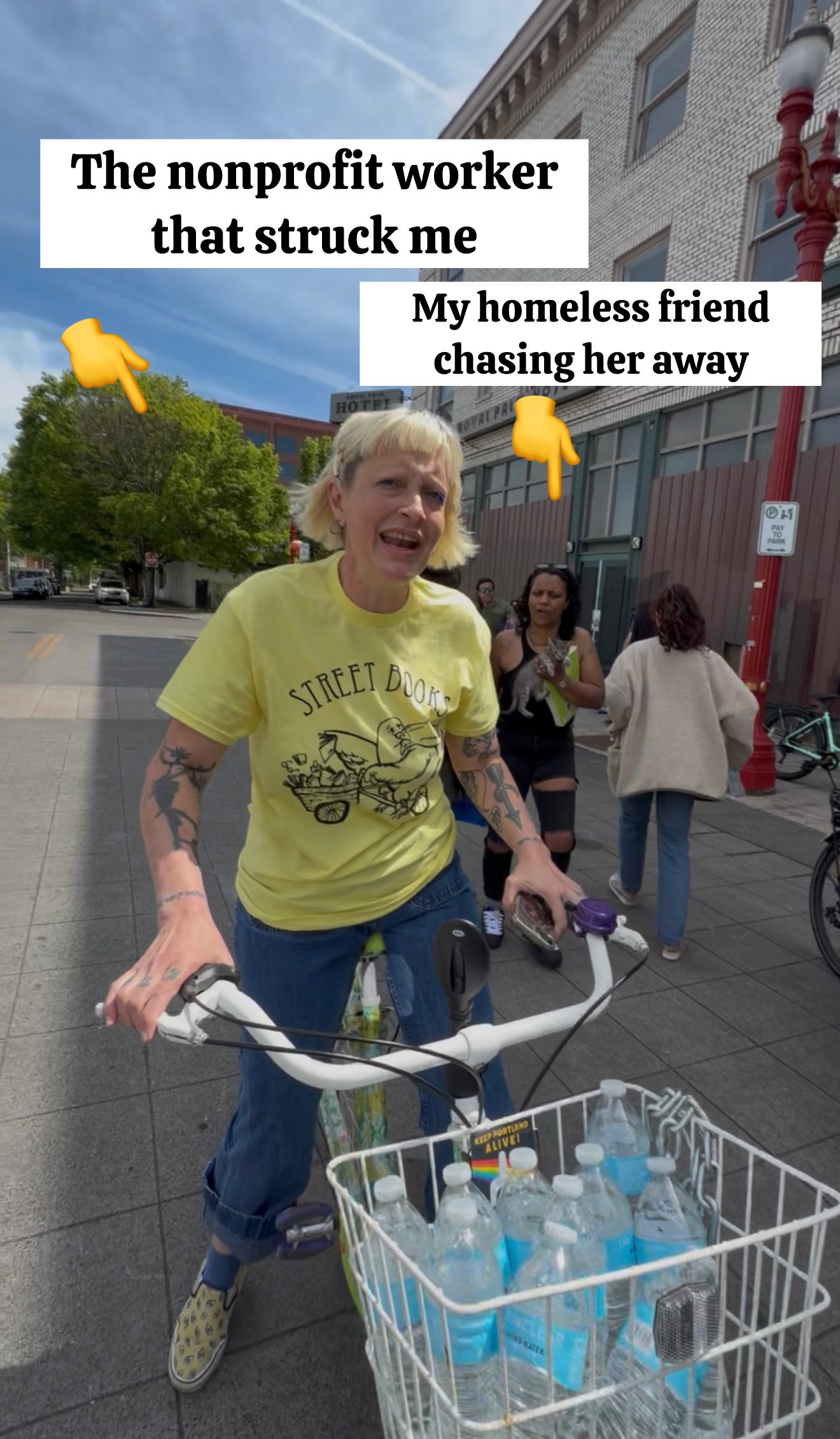
This week, I was physically assaulted by a homeless nonprofit worker while spending time with people I know on the street. What happened next revealed something I have been watching for years: parts of the homeless service system have confused compassion with control.

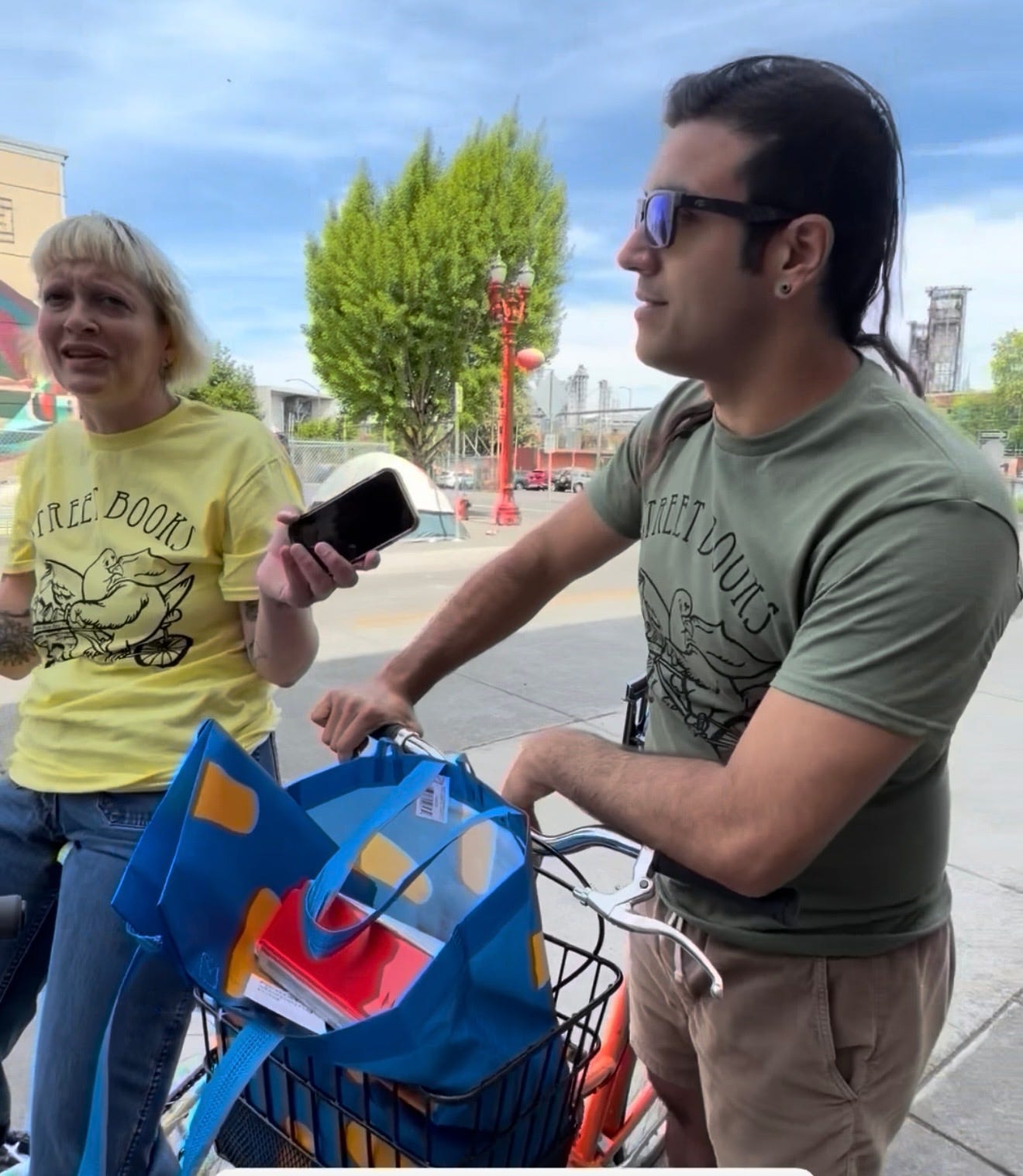
I was having a good day. I had just finished an interview and was talking with people I know when two nonprofit workers rode up hostile and began yelling that I was “exploiting” homeless people by interviewing them and offering five dollars for their time. Then a woman who calls herself Squire struck me in the head.
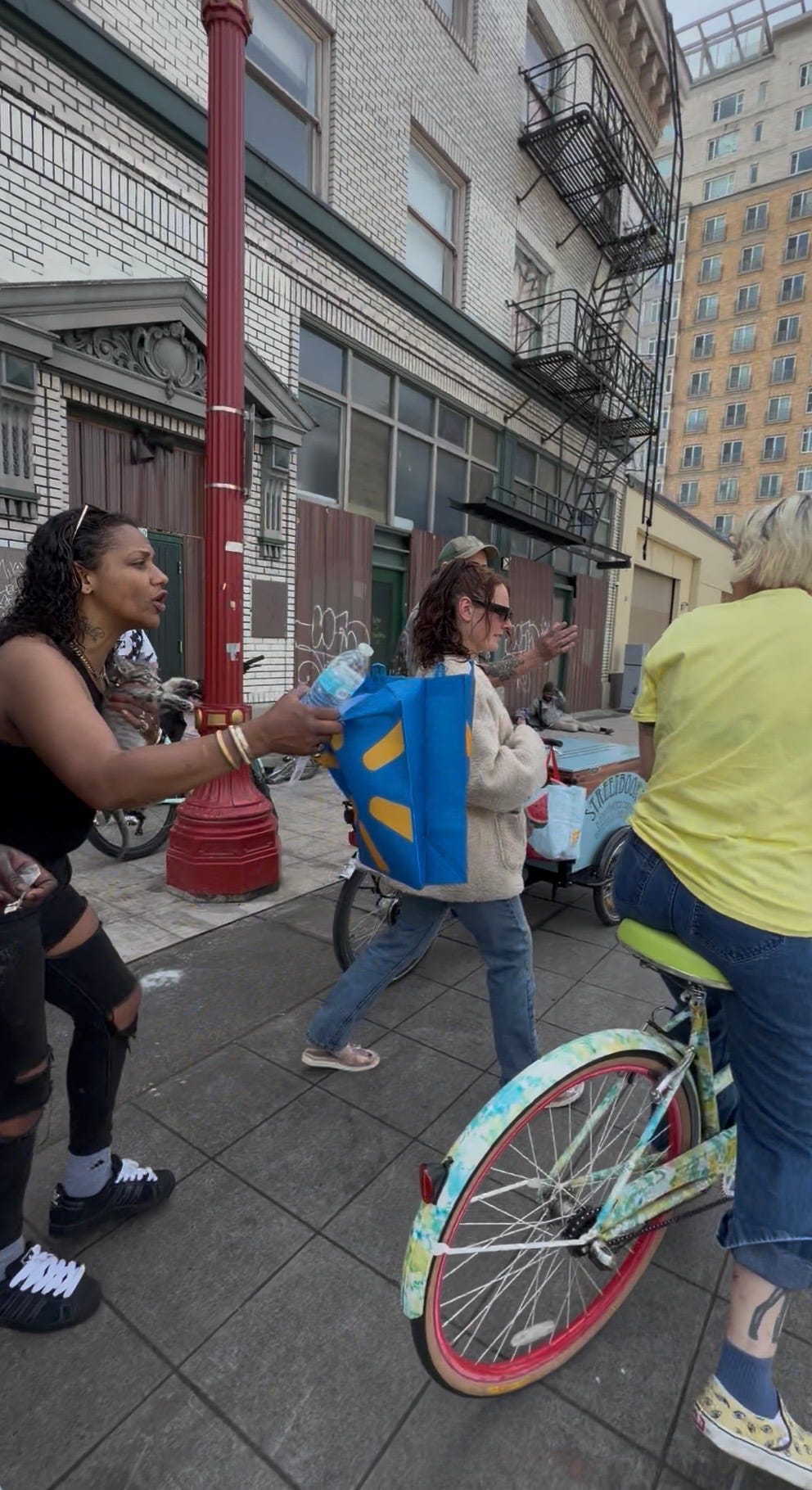
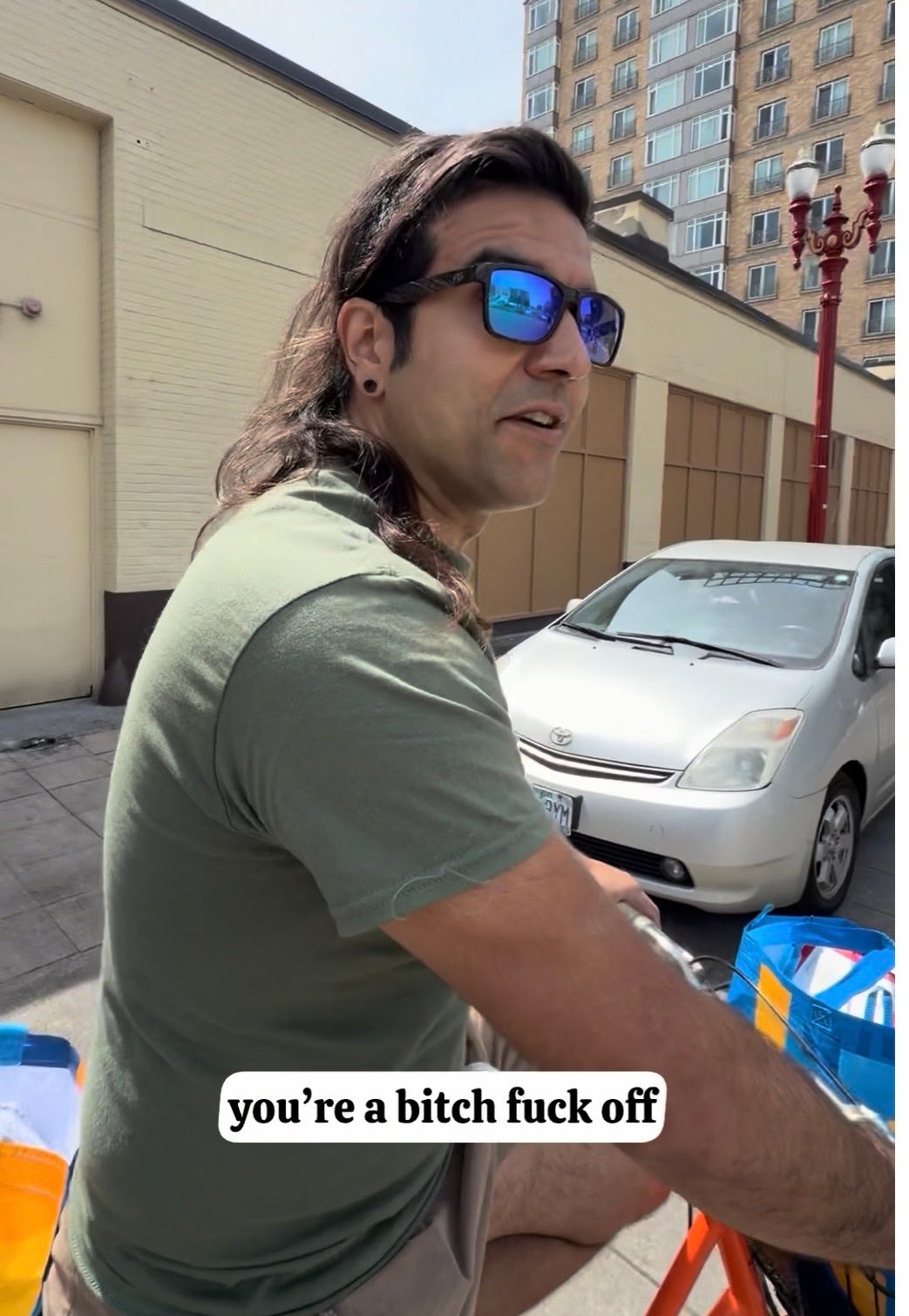
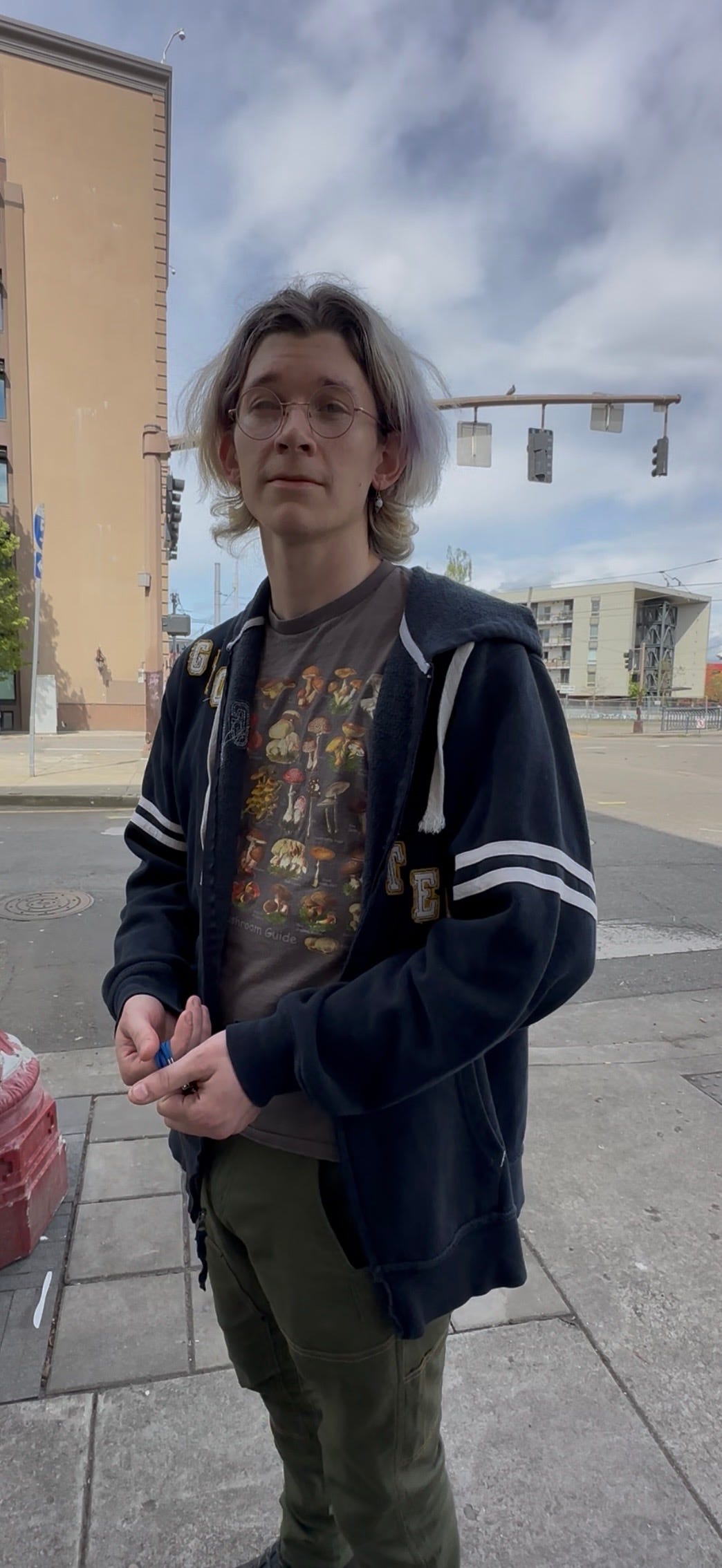
Several homeless people, the very people these workers claim to serve, immediately stepped in to defend me. The young man with her called a homeless woman a “bitch.” Then he called me one. As they rode off, Nene warned them that if they came back, there would be consequences.
The homeless, maybe more than any other demographic, are big on respect. They saw people enter their space acting superior, disrespecting someone they knew, and escalating a situation around vulnerable people who already live with enough chaos.
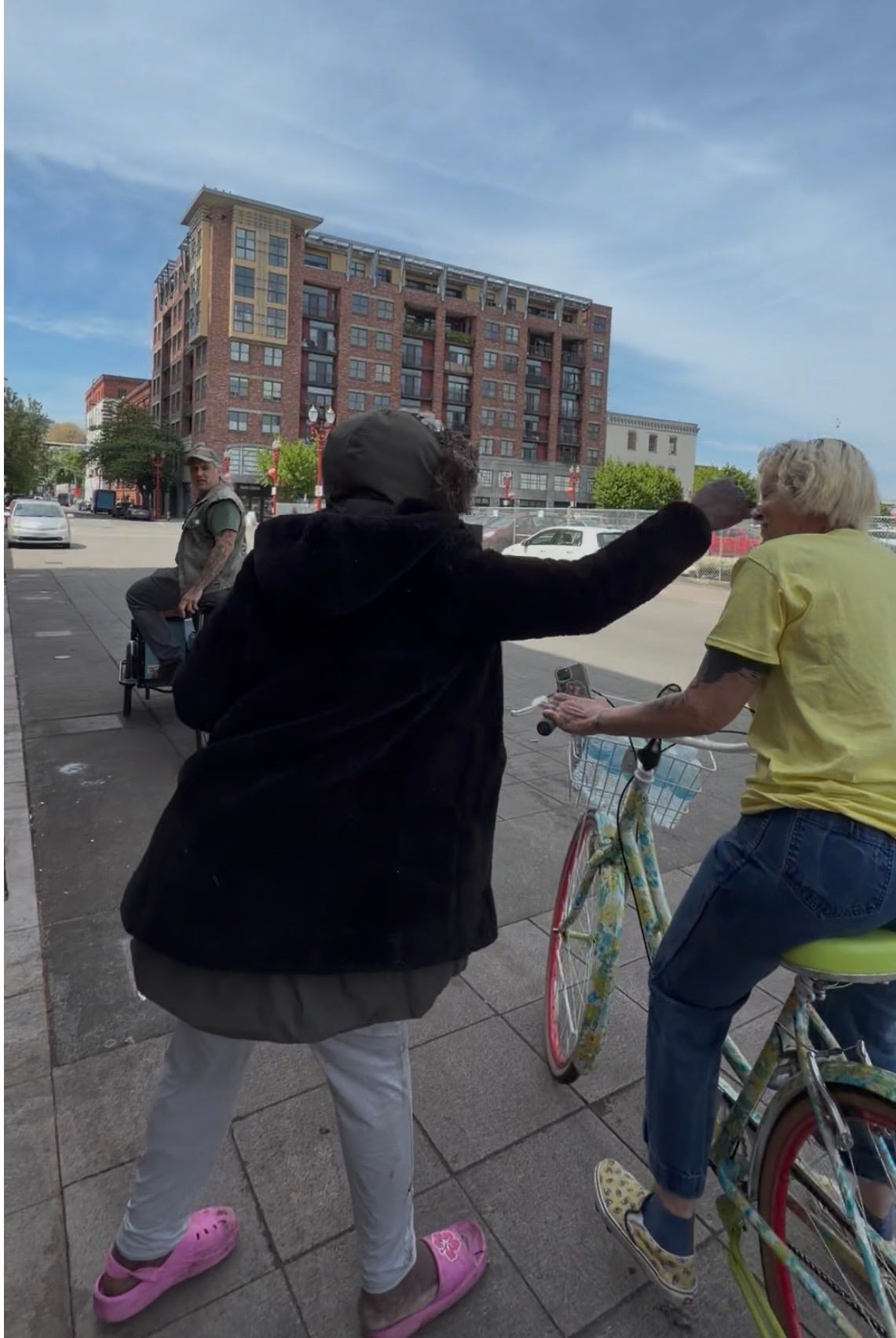
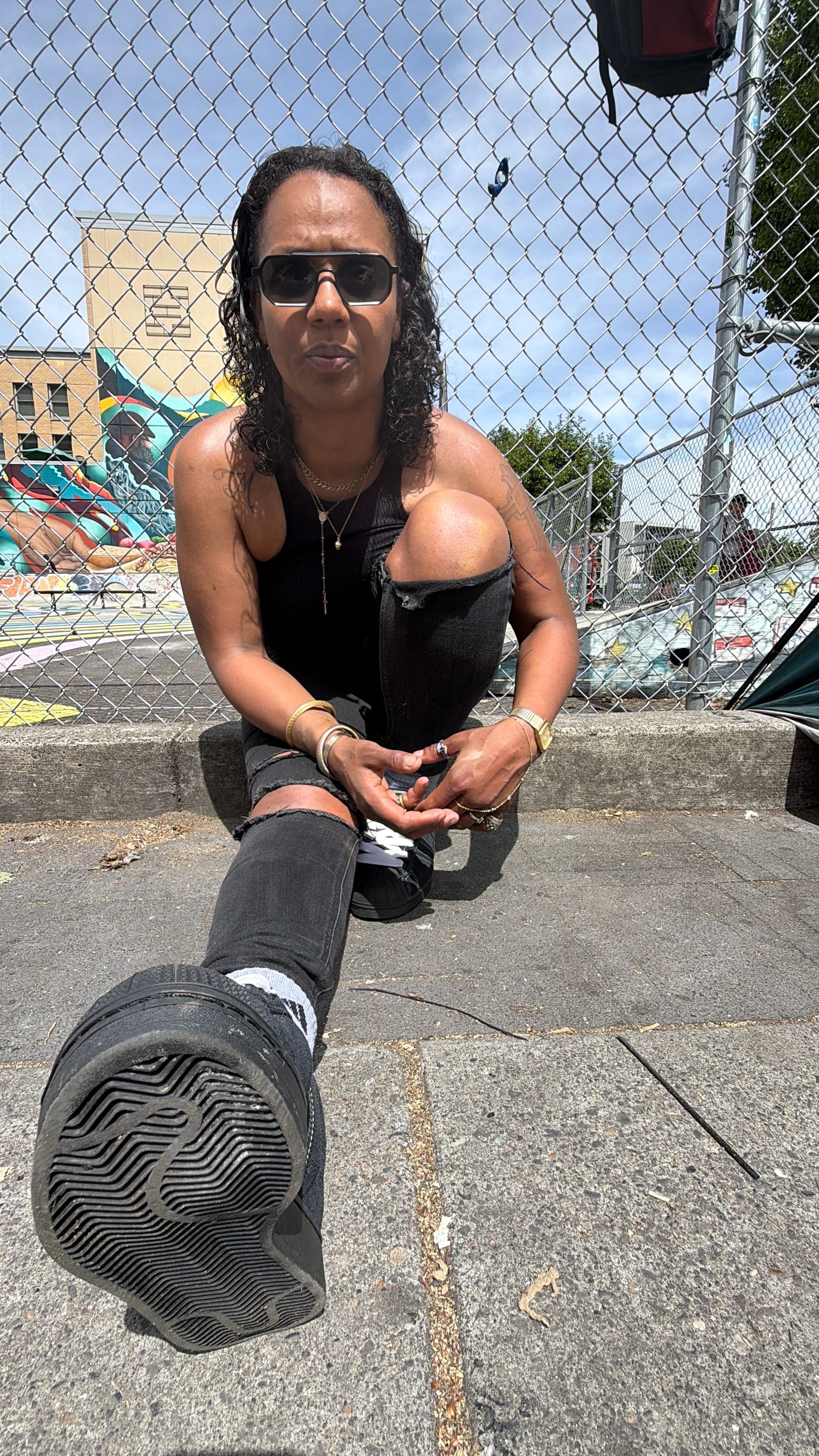
I have known Nene for more than five years. I have had more than two hundred contacts with her. I have sat with her countless times talking about her family, her struggles, her highs, and her lows. She has cried on my shoulder and laughed at my jokes. We are from different worlds, but we have built strong mutual respect. So when these workers rode up and immediately started disrespecting me and everyone around them, she took it personally.
This was not an isolated incident. I have other videos of them acting unprofessionally. Since I posted the video, I have received dozens of private messages from the homeless and even the ex-friends of these workers who shared that they have become radicalized and forgotten about the mission.
Nene a street leader who is both loved and feared
People have different politics, different ideologies, and different views about homelessness. That is normal. But there is a line between disagreement and violence. They crossed it immediately. Progressives have dominated the homeless response on the West Coast for years. In most major cities, the mayors, county commissioners, city councils, nonprofit leaders, and social service bureaucracies often operate from the same ideological worldview.
That worldview has shaped policy: Housing First, harm reduction, drug decriminalization, soft-on-crime approaches, and a social service culture that too often treats homeless people less like adults with agency and more like political symbols to be managed, protected, and spoken for.
But after years of living under these policies, many homeless people I meet are rejecting them. They no longer see compassion. They see activists and nonprofit workers who often seem to despise anyone who disagrees with them. More and more, the homeless are starting to bite the hand that claims to feed them.
I saw another example recently when a nonprofit worker from Street Roots approached my homeless friend Steve-o and me. She asked if I had consent to film him. It was a ridiculous question, considering Steve-o was talking directly into my phone as she approached. When we responded politely, she became upset, walked away, and told both of us to “F off.”
For years, many nonprofits have spoken constantly about dignity, trauma-informed care, compassion, and respect. But over the last few years, I have watched something shift. Some workers no longer seem content to serve the people in front of them. They expect compliance. They expect ideological agreement. They expect obedience.
I saw this mindset when I worked in social services. At times, it felt less like a profession and more like a cult. We were expected to think alike, distrust outsiders, never criticize the system, and quietly accept the approved political worldview. Questioning the work was treated almost like betrayal.
A person living outside is often in survival mode. They may be traumatized, addicted, paranoid, exhausted, or deeply distrustful of institutions. The last thing they need is a nonprofit worker acting like a strict parent demanding blind obedience, yet that is exactly what I am seeing more often.
Because homeless people are vulnerable, they often have very little recourse. If they push back, they risk losing access to services. If they complain, they may be dismissed as unstable. If they walk away, they may lose one of the few connections they have.
Some workers act as if their moral superiority gives them permission to say or do whatever they want in front of vulnerable people. They talk down to them. They shame them. They try to control who they speak to, what they say, and what they believe. They confuse service with authority. That is not trauma-informed care. That is power.

And when power is mixed with ideology, it can become abusive very quickly. The worst version of this dynamic is the overbearing social worker with a savior complex. This person does not always see the homeless individual as a full human being with agency. They see them as a project, a symbol, or proof of their own compassion.
Abuse inside systems of care does not always look like abuse. It often comes wrapped in the language of love, dignity, equity, inclusion, and compassion. But if the person receiving the “care” is being controlled, shamed, manipulated, or punished for disagreeing, then it is not care. It is domination.

I have seen this dynamic play out in other ways too. I met two homeless siblings a brother and sister, both veterans who said they were kicked out of a shelter for being conservative. I posted the video and soon received angry messages from people connected to the shelter demanding I remove it.
A day later, I met another homeless man who said he had also been kicked out of the same shelter because he was uncomfortable with staff demanding he use gender pronouns every time he spoke to them.
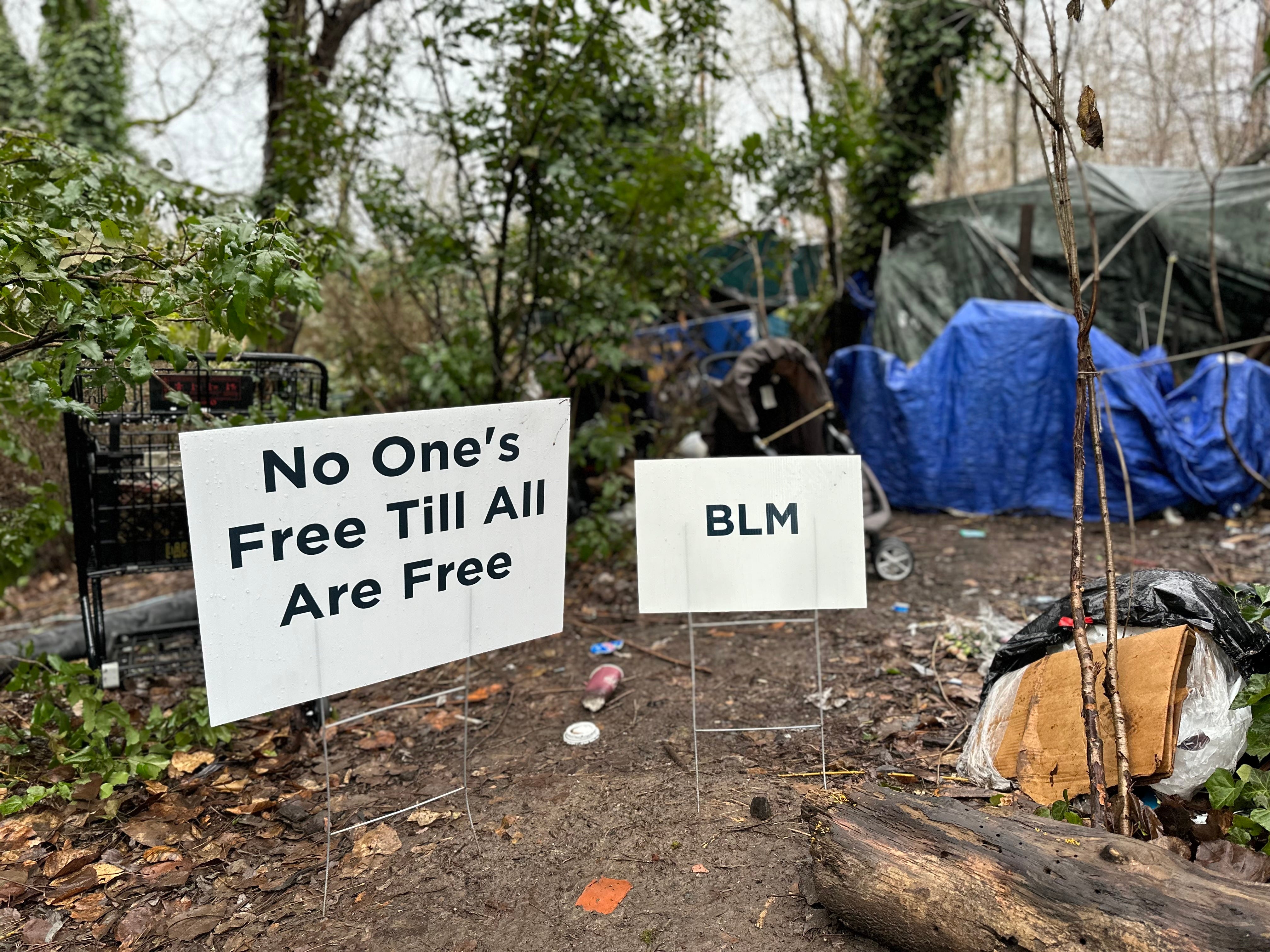
Another homeless woman told me she lasted only one week in a Portland shelter because, in her words, staff pushed their “leftist agenda” every day. She said returning to the streets was almost a relief.
There is something deeply wrong with a social service system that fills its mission statements with words like dignity, respect, inclusion, and trauma-informed care, then demands ideological obedience from vulnerable adults desperate for help.
These are people seeking shelter, food, safety, treatment, and stability. They are not there to be converted. The people who claim to speak for the homeless often do not seem to understand them at all. And more and more, the homeless are saying it out loud.
Homeless people do not need nonprofit workers to become their parents. They do not need ideological handlers. They do not need to be managed like children. They need honest help. They need consistent outreach. They need clear options. They need boundaries, dignity, accountability, and real pathways off the street.
This is not about left or right. It is about right or wrong. The job of a nonprofit worker is not to create obedience.
They are there to serve, not control.
I would like to highlight good programs doing good work. If you know of any send me a message. As for Street Books, The Blanchet and Street Roots, I hope they receive additional training. I have private contacts within these organizations who like my work, and they remind me that agencies are not necessarily radicalized; the people are.
Working in the field, everything you say is true. I’ve known amazing mental health professionals who embodied their values and ethics in how they approached people and some who went into the field to work out their own issues and I wouldn’t wish on my worst enemy. True social work is based in values and ethics that is client centered, not provider centered. These self righteous militant activists are a nightmare
I have always been amazed at the amount of mindless hate that has been directed at you by keyboard cowards for telling the truth. You're a good man.